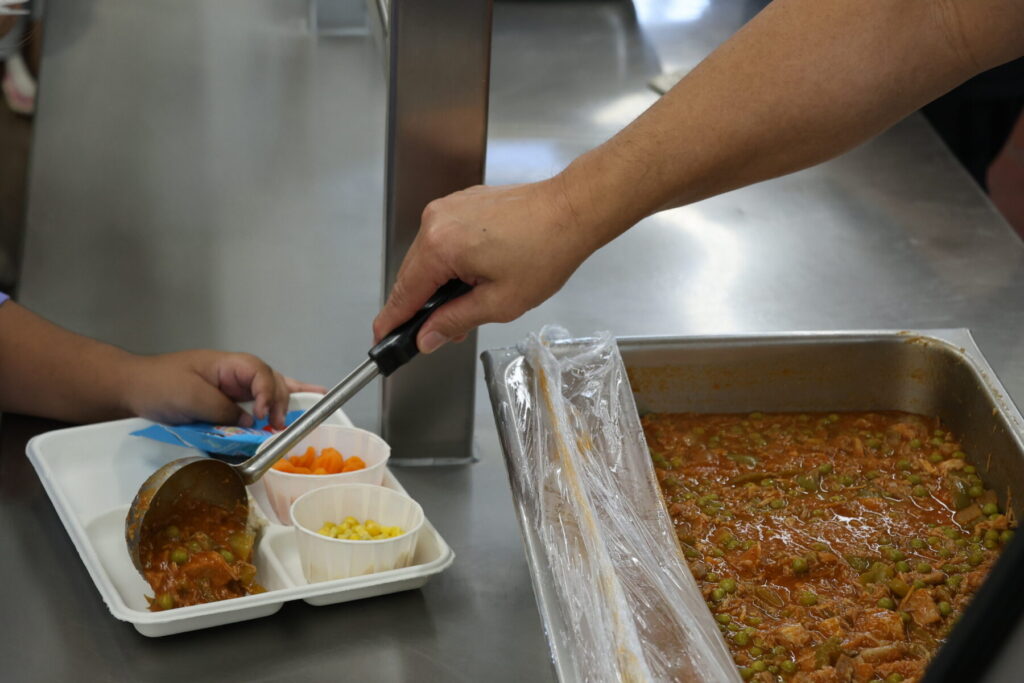
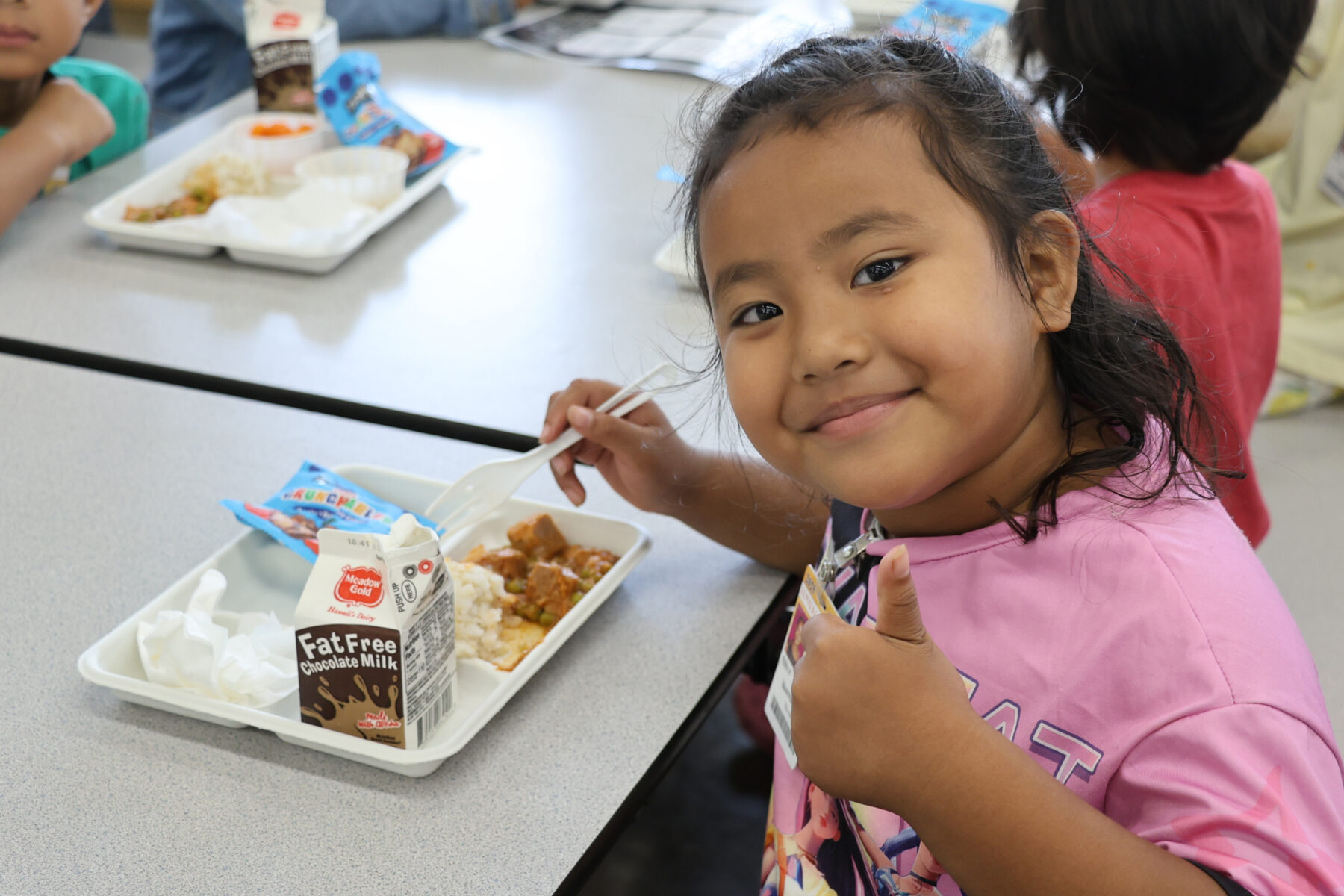
HONOLULU — This May Hawaiʻi public school cafeterias statewide were offered the opportunity to serve pork guisantes — a classic Filipino dish — for lunch using locally sourced pork from Island Farms in Wai’anae as well as local green bell peppers, as available.
Over 7,400 pounds of local pork and about 950 pounds of local green bell pepper are anticipated to be distributed to about 130 participating schools.
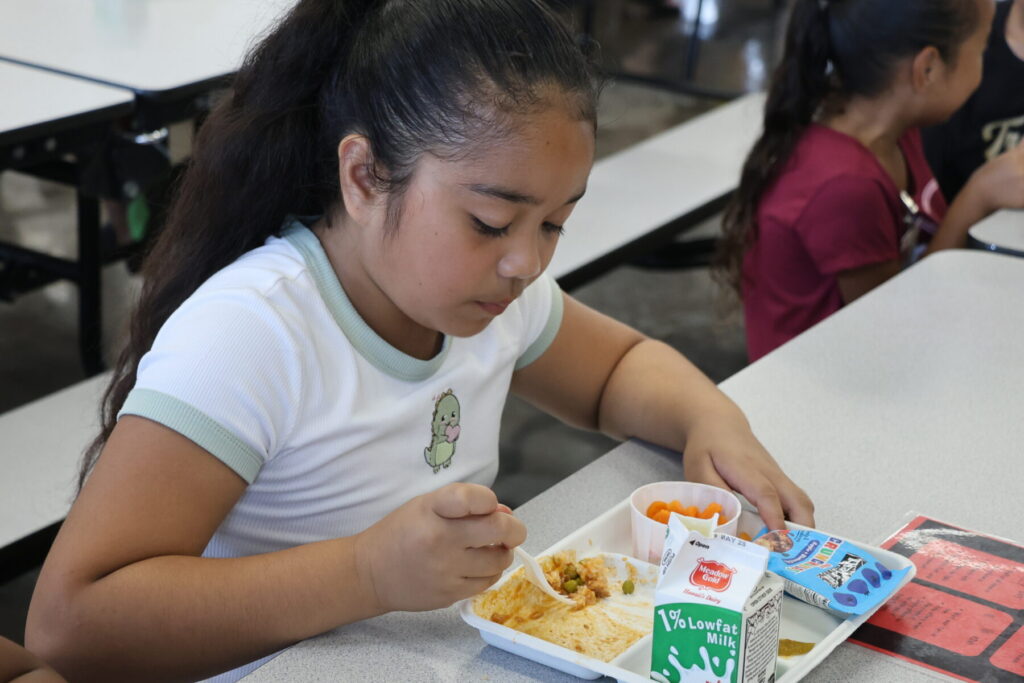
The traditional dish was new to many students at King William C. Lunalilo Elementary on Oʻahu, while also bringing familiar flavors that reminded some students of meals they enjoy at home.
“It was really good, and I don’t think I’ve had it before,” said third grader David Yin. “It’s really new to me, and I was surprised that it’s delicious.”
Fourth grader Tayson Tobias Subiono admitted he was hesitant at first. “When I first saw it on my plate, I thought, ‘I don’t want to eat it,’” he said. “But then I tried it, and then I liked it a lot. And I ate all of it. It was very tasty.”
For some students, the meal reflected flavors connected to their own cultural backgrounds. “It was good. And it was familiar from home,” said fifth grader Jzlin Dela Cruz, whose family regularly makes pork guisantes at home.
Fifth grader Jessica Luu shared a similar experience. “I thought it would be bad because I saw the peas,” she said. “But then I tasted the sauce and it tasted like my Vietnamese culture.”
Third grader Francy Saimon also enjoyed the dish:“It was very good and kind of like the same thing like what I always eat, but it tastes better.”
The effort is part of the Department’s farm-to-school initiative, which aims to enhance food sustainability in Hawaiʻi and aligns with the goals of พระราชบัญญัติ 175 to improve student health while supporting local farmers.
“I think that using more local pork would be very good,” added Tobias Subiono. “I think it will help keep the culture of Hawaiʻi alive and well.”
Hawaiʻi public schools are one of the state’s largest institutional consumers of food products, serving over 100,000 student meals a day. The Department continues to work closely with local vendors statewide to see how fresh local produce can be scaled across all schools in the future on a regular basis.