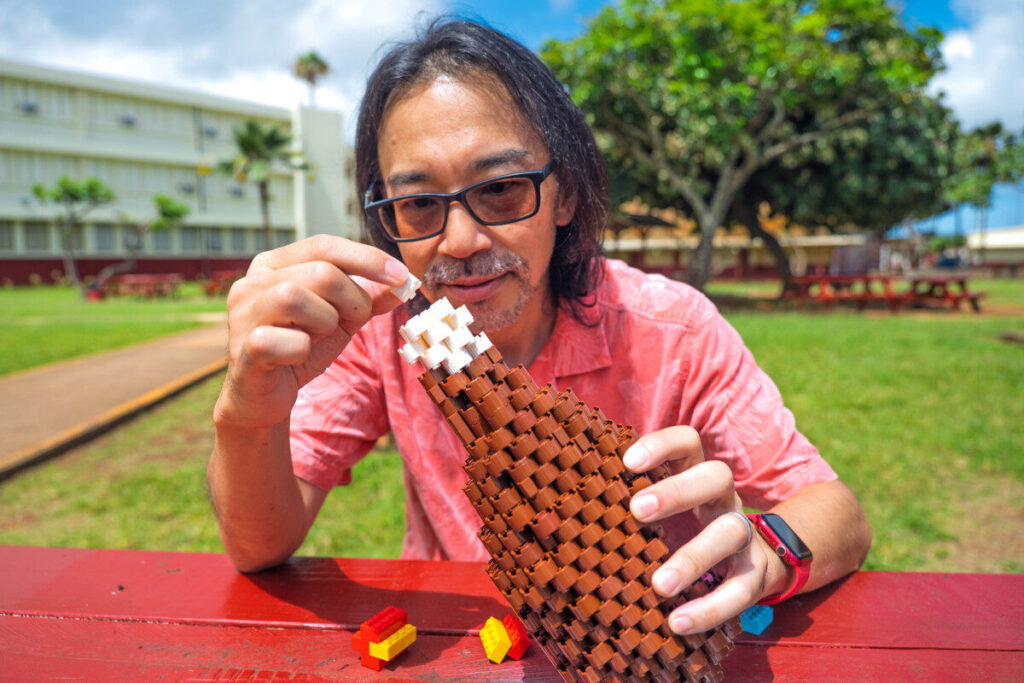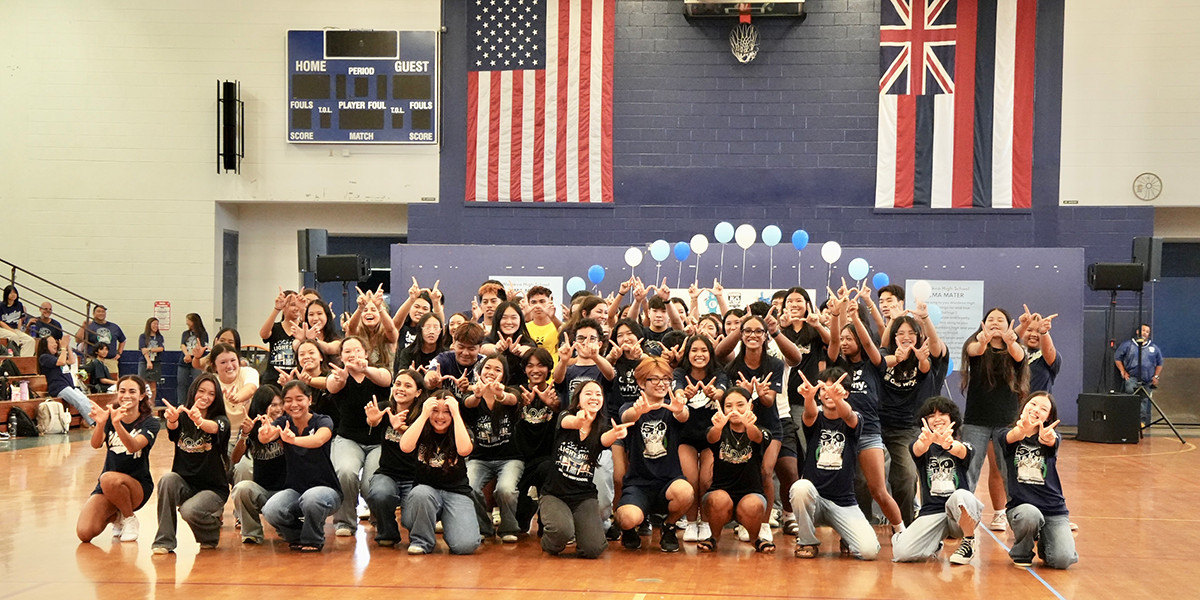
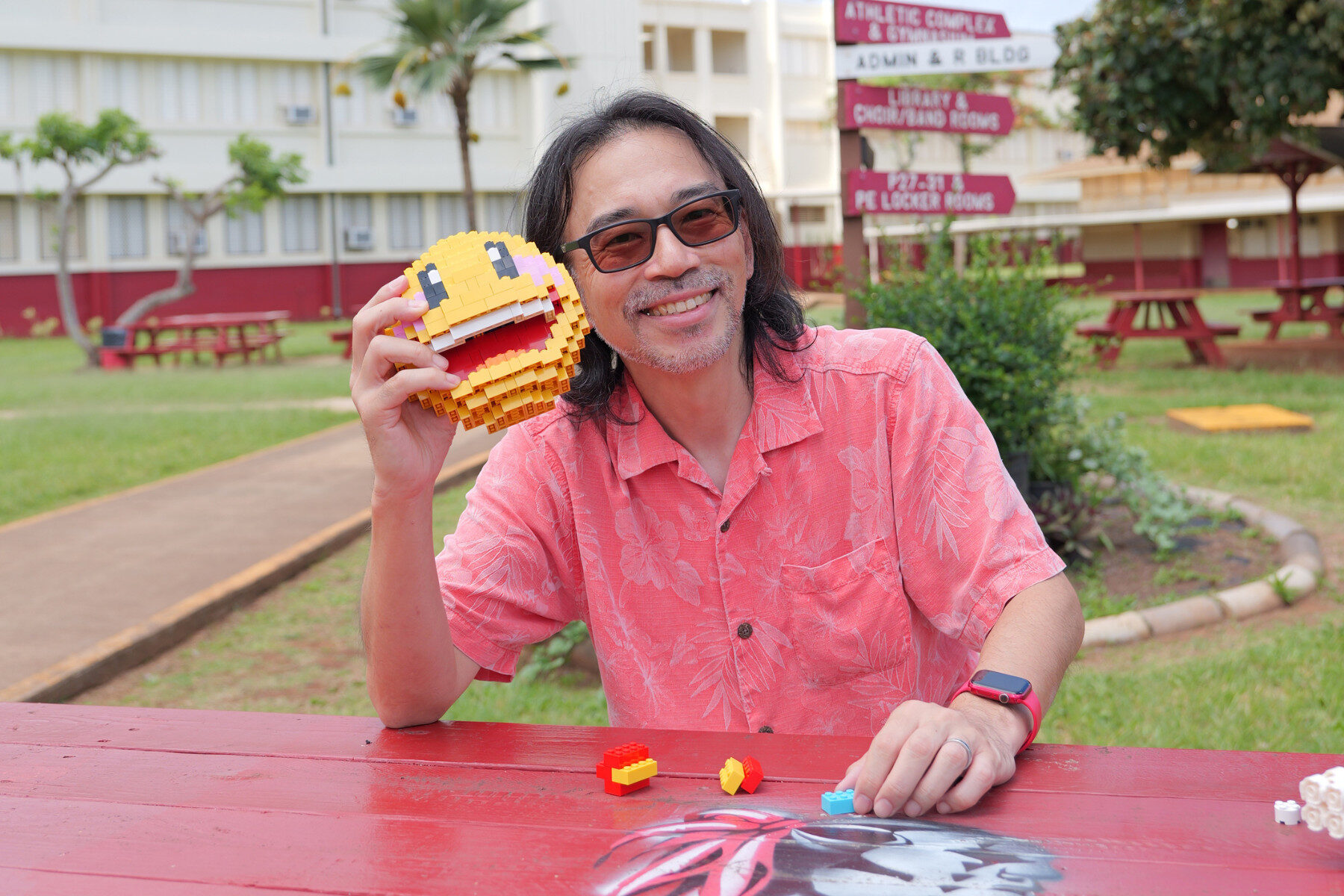
Originally from Yokohama, Japan, Yusuke Yamana found a home at the Kahuku High & Intermediate School (KHIS) working among the cords, laptops and routers as he moved from classroom to classroom assisting teachers and staff during tech emergencies.
“Yusuke is a brilliant problem-solver who dissects complex issues with ease and approaches every technical challenge with a meticulous, calm and detail-oriented focus,” said Principal Walter Santiago.
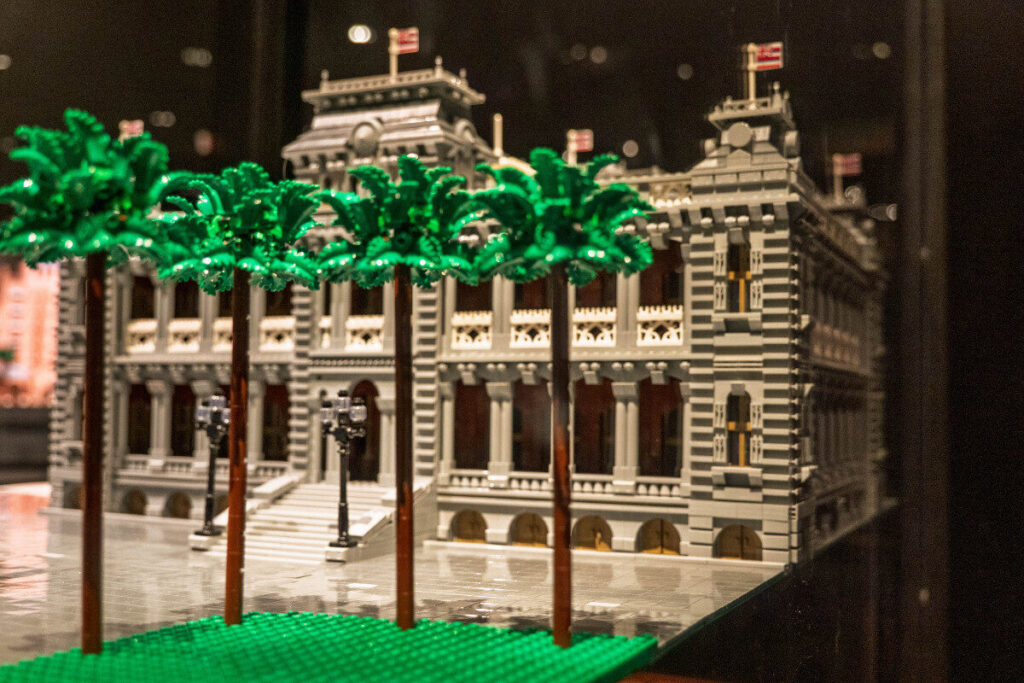
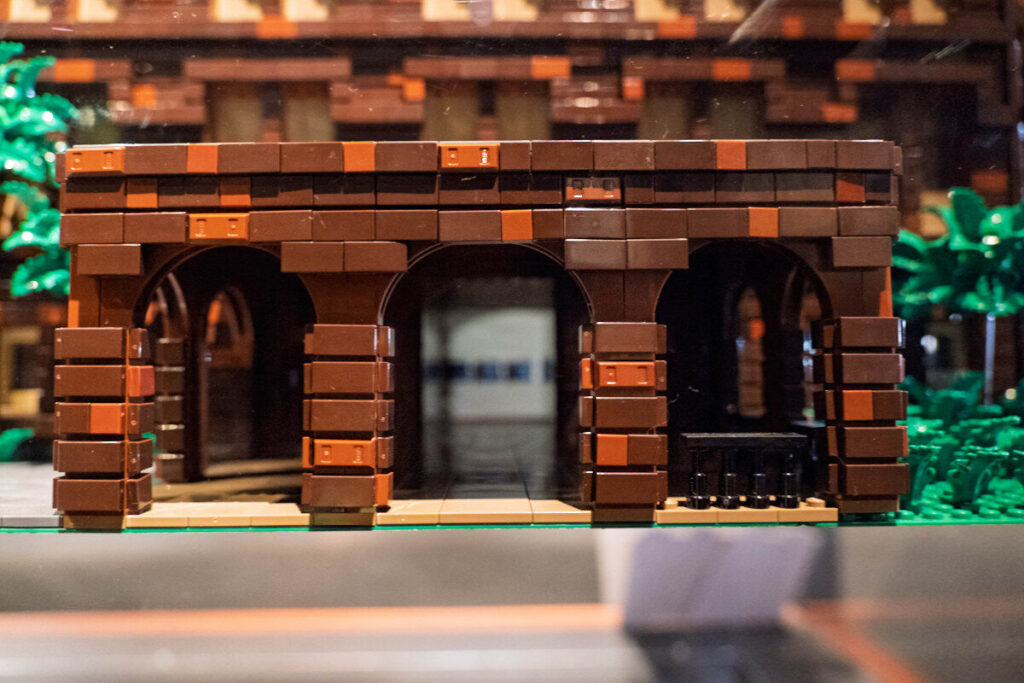
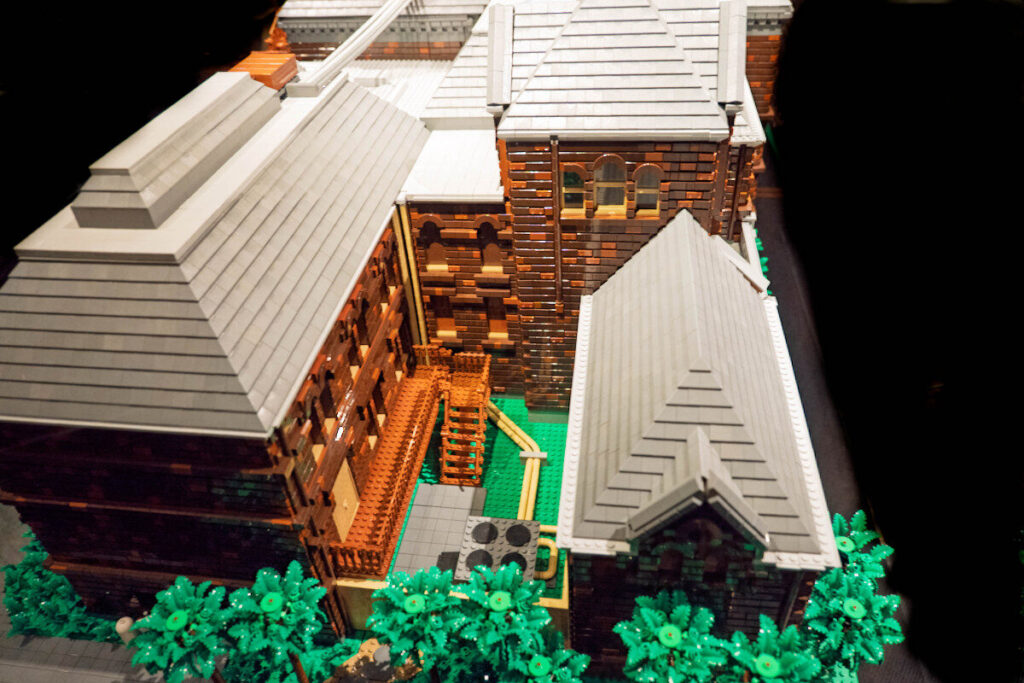
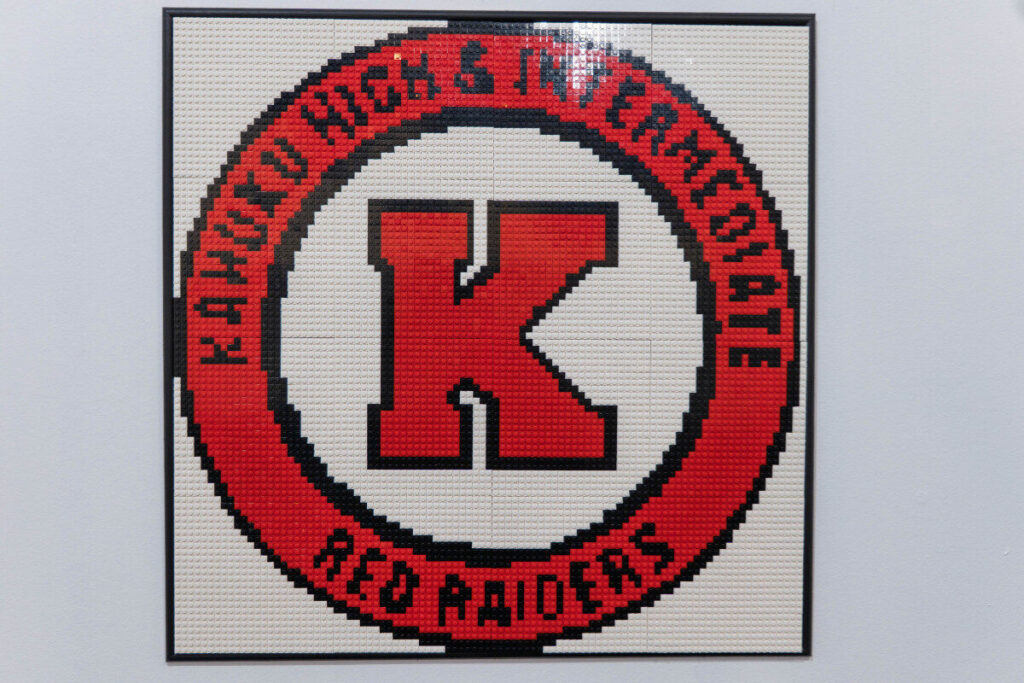
Recently, Yamana revealed another talent—creating one-of-a-kind photorealistic masterpieces built out of LEGO®, currently on display at the Bishop Museum’s Aloha Bricks ‘26: Stories of Hawaiʻi. The exhibit features many Hawai‘i landmarks, animals, plants and more in LEGO® form. Another highlight of the Aloha Bricks exhibit is the Middle School Mosaic Gallery. Kahuku Intermediate students, along with 50 other middle/intermediate schools from across the state celebrated school spirit by building large-scale, two-dimensional logos of their school. The exhibit runs until Oct. 11.
Q: How did you get started creating masterpieces in LEGO®?
ก: I joined Hawaiʻi LEGO® Users Group (HiLUG) in 2019. My wife, who is the Japanese language teacher at Kahuku High, encouraged me to join a community since I had just moved from Japan. HiLUG is an officially recognized LEGO® User Group. Through the group, we have the opportunity to participate in local events in collaboration with organizations such as the Bishop Museum.
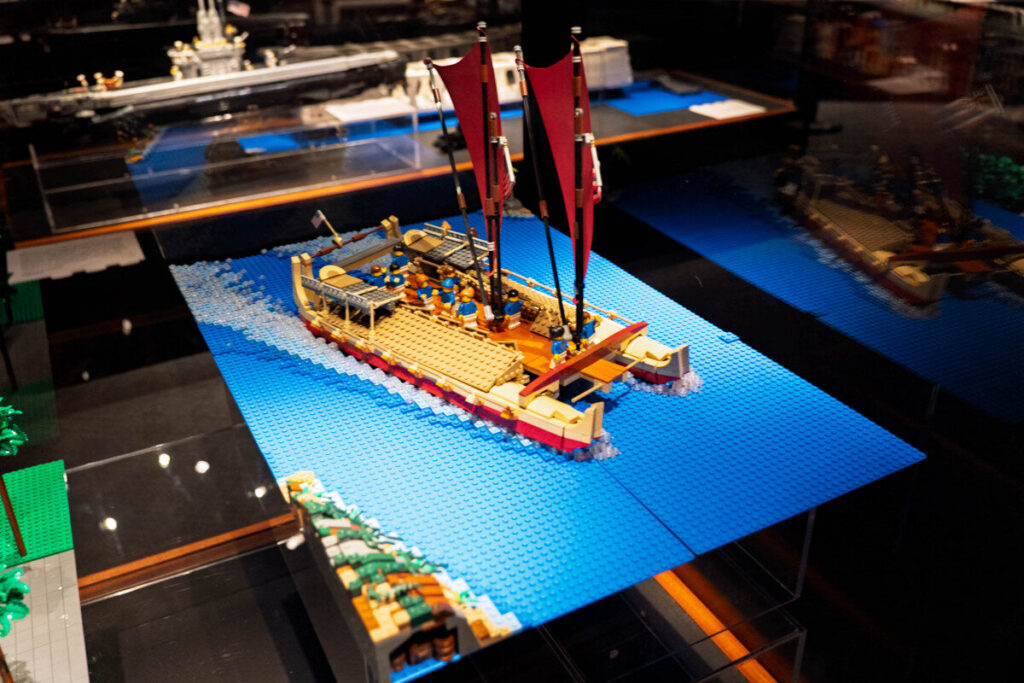
When I joined, I had no experience building “My Own Creations” (MOC). However, the Bishop Museum was planning a LEGO® exhibition and needed a model of Hōkūleʻa. As a result, my Hōkūleʻa model became a meaningful way for me to reproduce traditional local culture using modern toy bricks. When a friend told me, “Thank you for respecting our culture,” I was deeply moved.
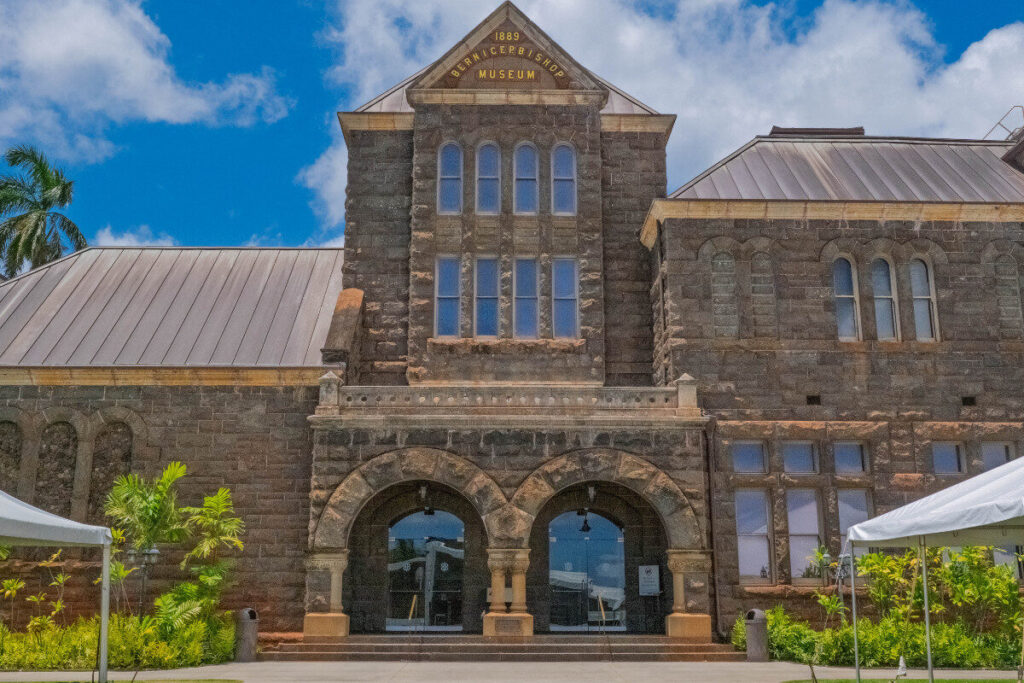
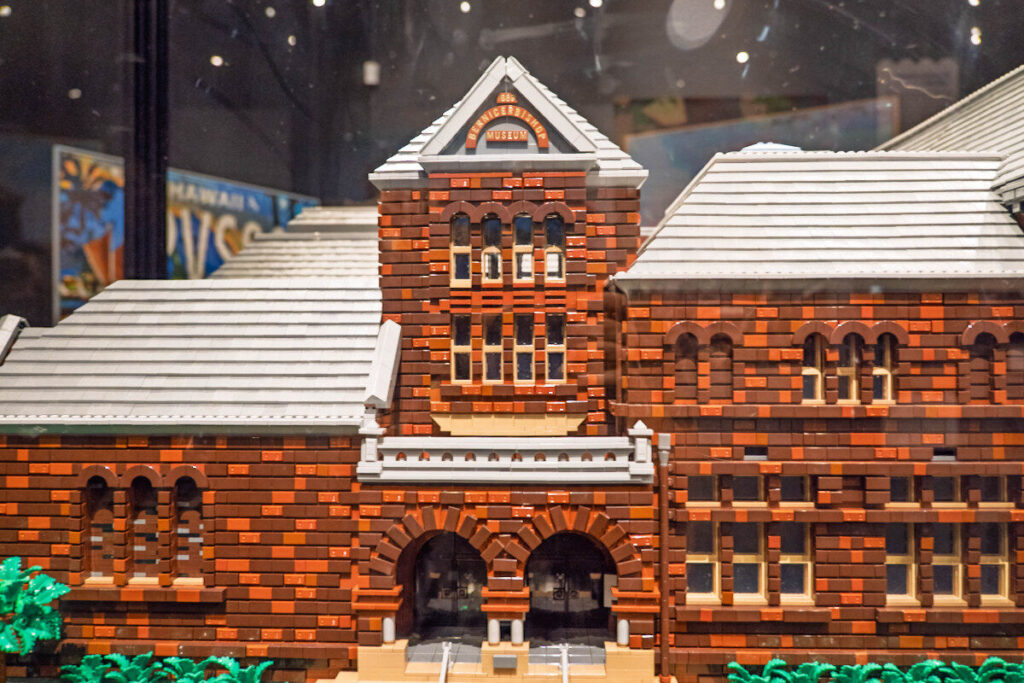
After that experience, the museum asked HiLUG to build something that represents Hawaiʻi for an exhibition in 2026. I wanted to create a Hawaiʻi icon that was truly loved by the community and I was given the opportunity to build models of Iolani Palace and Bishop Museum’s Hawaiian Hall.
And through these projects, I realized that LEGO® building is not just a hobby—it’s a powerful way to practice design thinking, problem-solving, and cultural storytelling.
Q: Do you see a connection between building LEGO® and building lifelong skills for students?
ก: I’m not a classroom teacher, but as an IT support staff member, I see a strong connection between LEGO® creation and skills such as Career and Technical Education, design thinking and problem-solving. In the building process, I use many skills I gained through my 20 years of experience as a system analyst and project manager, along with some graphic design skills. I also ask myself whether the design works both visually and structurally—whether it looks accurate and is strong enough to be transported and displayed safely.
Q: How do you translate cultural and historical icons into physical models?
ก: When I translate cultural and historical icons into LEGO® models, I focus on four important things:
1. Respecting the original icon
I always imagine how people will feel when they see the model. I don’t want them to think, “Oh, it’s just a toy.” I want you to feel the way you would feel when viewing the original inspiration.
Hōkūleʻa represents the continuation of traditional Polynesian navigation using modern knowledge and technology. When you see my model, I hope you can feel both the traditional roots and the future. When you see my model of Iolani Palace, I want you to think about Hawaiʻi’s last monarchy and the history behind it.
2. Deciding what to keep and what to simplify
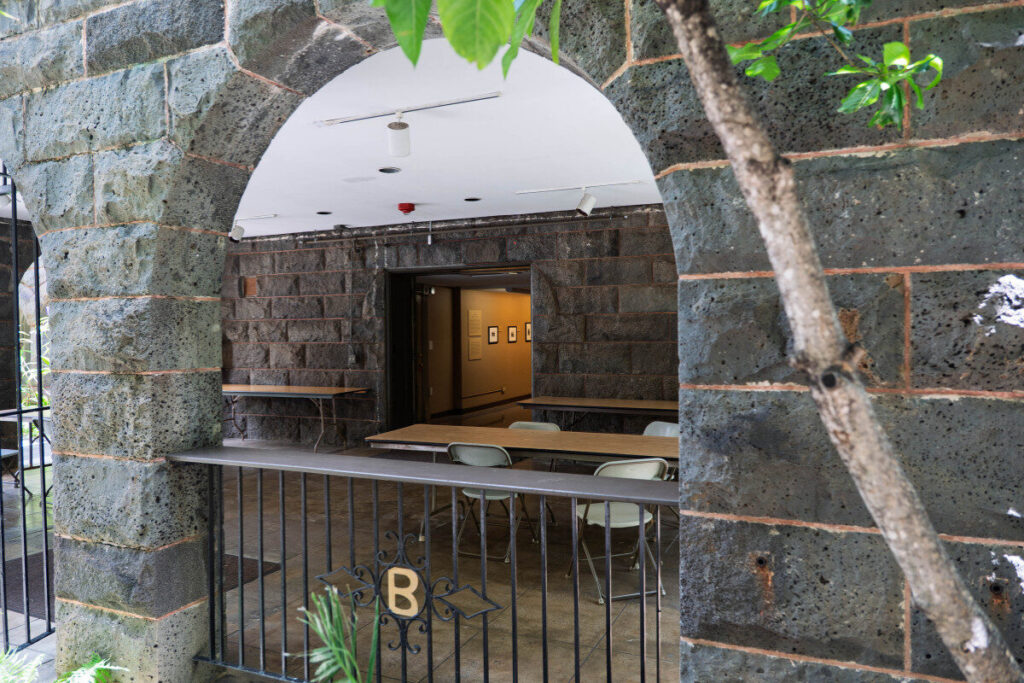
When translating a real building or object into LEGO®, I always have to decide what details must remain and what can be simplified depending on scale, available parts, and schedule. Hawaiian Hall was built in a Neo-Romanesque style in the 19th century. The arched windows are a key feature, and the texture of the exterior walls is also important. Those are details I must keep, even if I simplify other areas.
3. Adding a sense of reality
If someone knows the real place, I want the model to feel believable and familiar. When I designed the wake behind my Hōkūleʻa model, I wanted them to look realistic. I researched the physics and the shape of the wake. A museum visitor told me it looked just like the waves behind her own catamaran.
Based on that experience, I added small realistic details to Hawaiian Hall, such as drain pipes, restroom signs, trash cans, railings and air-conditioning units. If you know the building, I want you to notice those details and say, “Oh, I know this place! I see that every time!” Those moments of recognition make the model feel real.
4. Creating a point of view for both adults and children
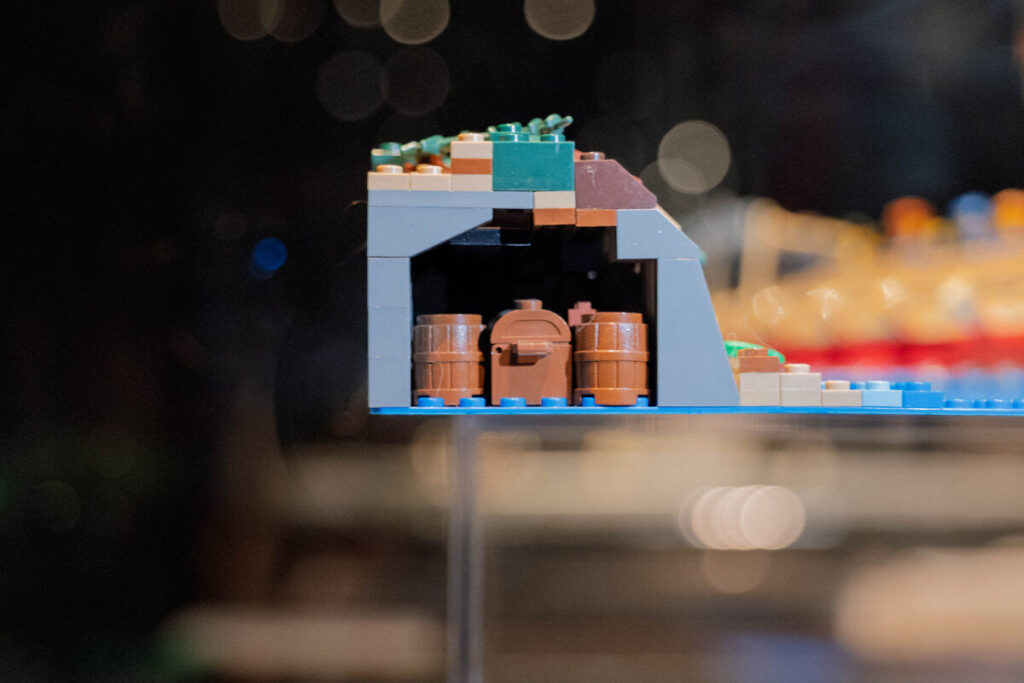
Sometimes I hide small details in places that only kids can notice at their eye level—for example, hidden treasure in a cove in the Hōkūleʻa model or hidden artwork in the hallway of Hawaiian Hall.
I also want my work to encourage the next generation. My Hōkūleʻa model has 14 faceless crew members—seven male and seven female—because I want children to feel that the story of voyaging is also their story that they can be part of. I want them to believe that someday, they can also build models like this. I hope my LEGO® creations help them dream about the future.
Q: Do you have any words of advice to students?
ก: Senri no michi mo ippo kara. “A journey of a thousand miles begins with a single step.” Hawaiian Hall was built with over 42,000 pieces—this is what I told myself while building the model. I would like to encourage students to be resilient, keep at your task and one day, you can create something that inspires others, too.