Hawai‘i public school students are getting hands-on experience in financial literacy by running nine student-operated credit unions on their campuses—some starting as early as fourth grade.
Known as student-operated credit unions (SOCUs), these are fully functioning, on-campus branches run by students for their school communities in partnership with local credit unions. The program helps students build financial literacy while gaining real-world work experience.
Starting with incoming freshmen in the Class of 2030, all students in Hawaiʻi public schools will be required to complete a financial literacy educational opportunity prior to graduation. Working at a SOCU is one of several ways students can meet this requirement, which is documented through their Personal Transition Plan (PTP), a required half-credit course for all students.
Schools may meet the requirement through a variety of approaches, including standalone courses, integration into existing classes, self-paced learning, or other instructional designs aligned with HIDOE’s financial literacy standards.
How SOCUs work: Once a week during the school day, the SOCUs open their doors to students and staff. Members can open accounts, deposit money and learn about finance. While a representative from the partner credit union is present to offer support, students take the lead in running daily operations.
The following HIDOE schools operate SOCUs:
- ‘Ewa Beach Elementary School (HawaiiUSA FCU)
- ʻĪao Intermediate (HawaiiUSA FCU)
- James Campbell High School (HawaiiUSA FCU)
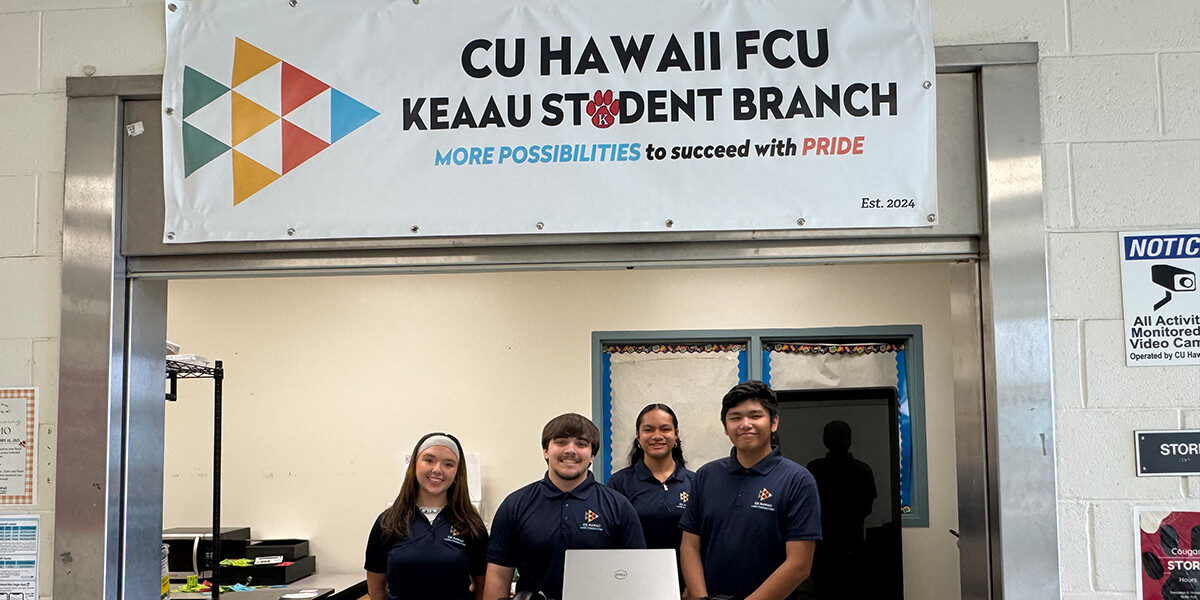
- Keaʻau High School (CU Hawaii)
- Nānākuli High & Intermediate (HawaiiUSA FCU)
- Pāhoa High & Intermediate (CU Hawaii)
- Pearl City High School (HawaiiUSA FCU)
- Waiākea High School (CU Hawaii)
- Waipahu High School (HawaiiUSA FCU)
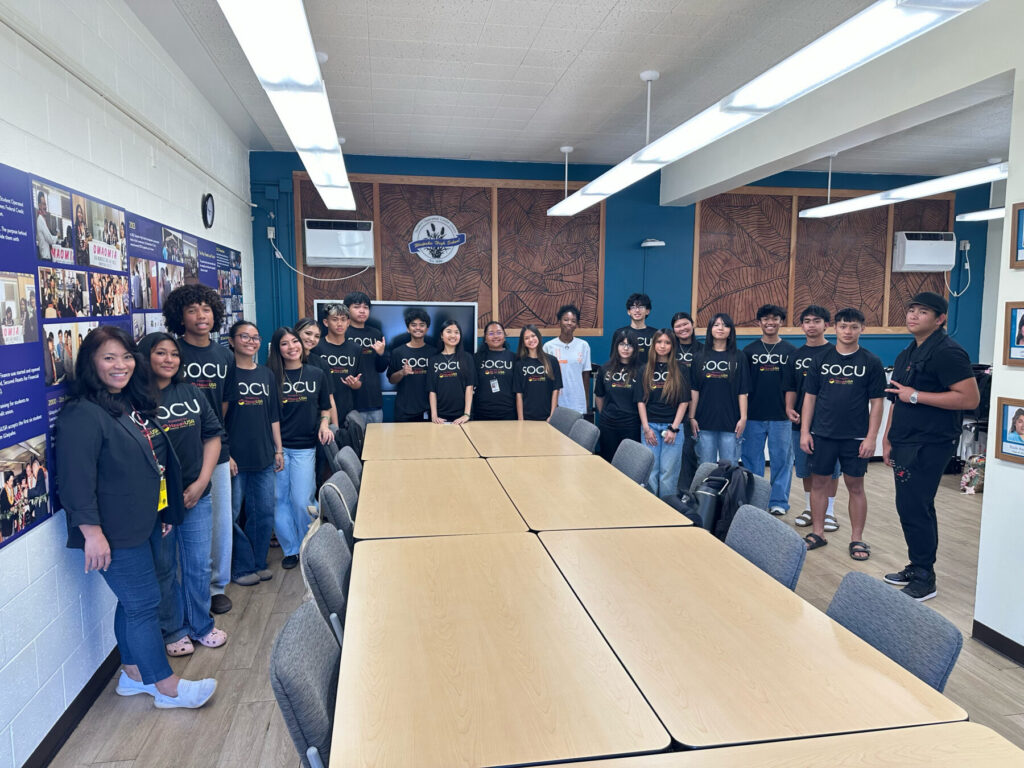
Waipahu High School launched the first SOCU in 1994 as part of an effort to expand on-campus workforce development opportunities for students. More recently, James Campbell High School opened South Side Credit Union on April 2, becoming the newest addition.
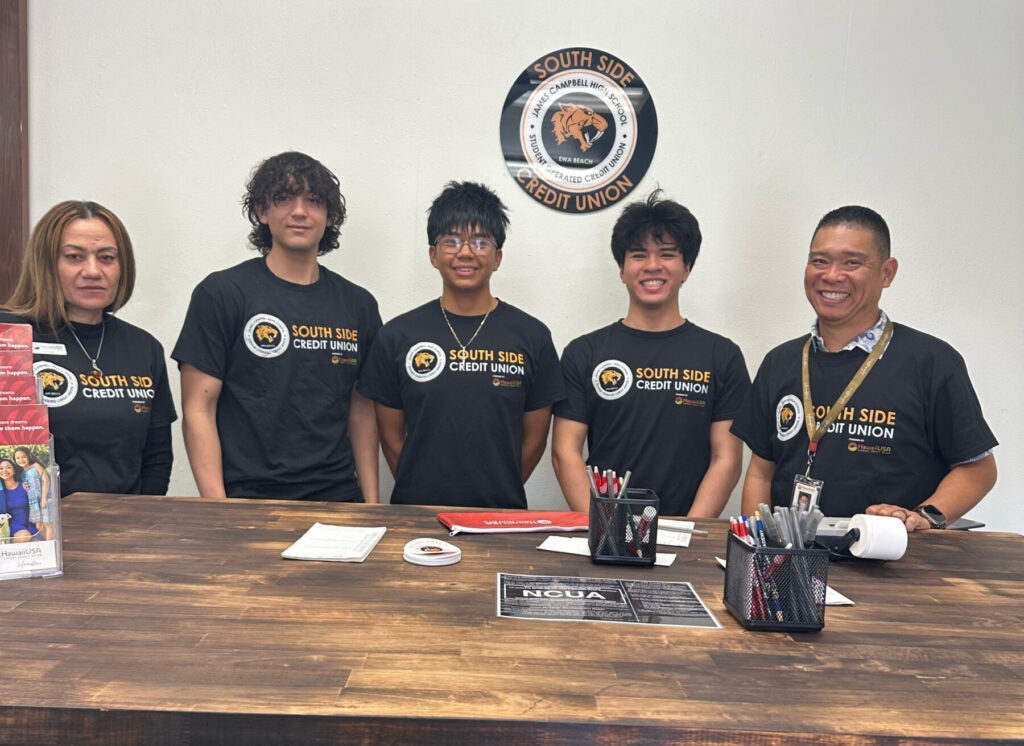
“I tell the students that HawaiiUSA Federal Credit Union is the bus and you folks are the bus drivers. We give you the tools to make things happen and it’s up to you to figure out what’s going to work and what’s not going to work,” said Bryan Yucoco, Financial Wellness Community and Program Lead at HawaiiUSA Federal Credit Union.
While banking is increasingly digital and automated, Yucoco said the most valuable skills students are gaining go beyond personal finance.
“Soft skills, conversational skills, how to build rapport, customer service—these are skill sets that artificial intelligence can’t take over. These are skill sets that we’re trying to incorporate into the SOCU,” he said.
He added that one of the most rewarding parts of the program is seeing students grow in confidence.
“It’s truly amazing to see how the students are at the beginning of the school year and how they’ve matured by the end of the school year. Their confidence in public speaking and financial literacy has improved dramatically,” he said.
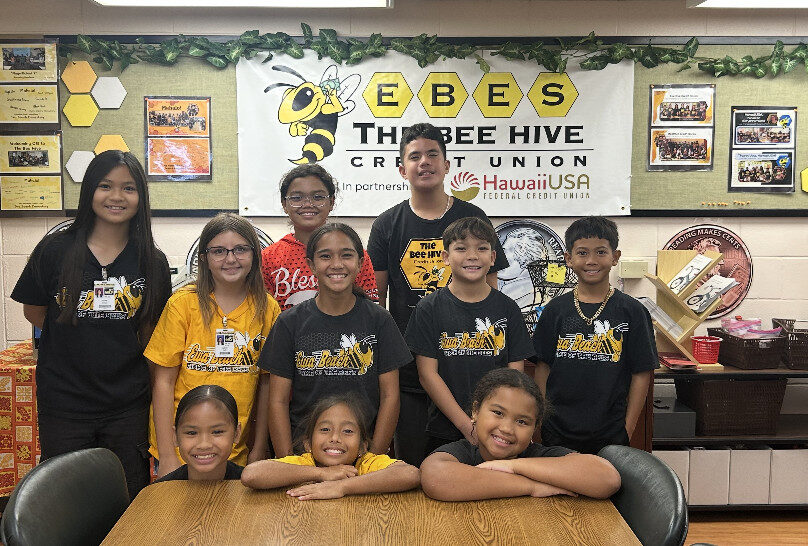
At ‘Ewa Beach Elementary School, home of the Bees, Tuesdays have quickly become students’ favorite day of the week. Student managers of the BeeHive SOCU organize prize drawings, run promotions and even create marketing materials — from posters to commercials to a student-produced music video, according to Susan Nakasone, a former school librarian at ‘Ewa Beach Elementary who helped launch the SOCU.
To keep operations running, students write letters to local businesses requesting donations for prizes and supplies, while also visiting classrooms to promote participation.
“It is so much fun to watch my students grow and embrace all the aspects related to SOCU— financial literacy, customer service, marketing, creativity,” said fourth grade teacher Caroline Nakagawa whose students run the BeeHive. “They are very passionate and keep each other accountable in terms of accuracy and being a respectful worker. Students who start the year hesitant and shy often end up confidently welcoming members to our BeeHive by name and facilitating the deposit process with ease. I think that people tend to underestimate the abilities of a fourth grader, but they gladly climb to the expectations of running a successful SOCU.”
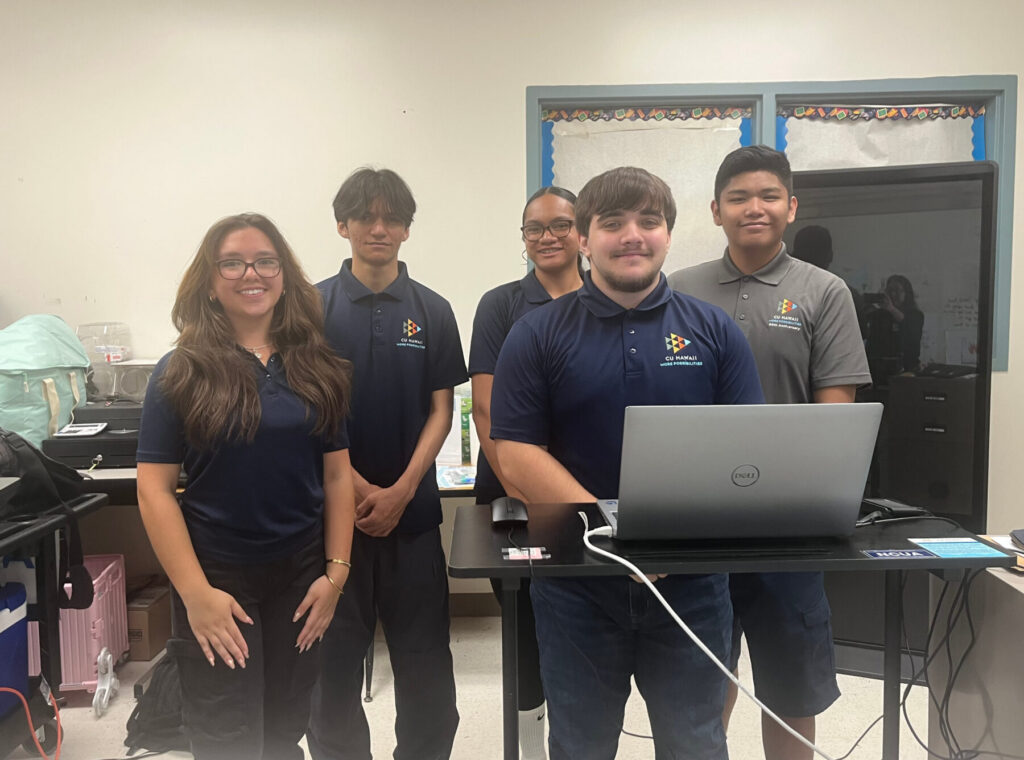
On Hawai‘i Island, SOCUs are already creating pathways to employment. For over 20 years, CU Hawai‘i has partnered with Waiākea High School for its SOCU, helping to develop young leaders who now serve throughout the community.
At Pāhoa High & Intermediate and Kea‘au High Schools, newer SOCUs are beginning to show similar results. CU Hawai‘i recently hired its first two HIDOE graduates from these programs.
“It is our privilege to partner with high schools across East Hawaiʻi to provide real‑world work experience and peer‑facilitated financial education on campus,” said James Takamine, president and CEO of CU Hawaiʻi. “Student branches exemplify CU Hawaiʻi’s commitment to building financial resilience and creating more possibilities for our community.”
For Keaʻau High senior Nathan Dela Rosa, the experience has been invaluable.
“There were a few reasons I wanted to get involved with the SOCU. First off, it gives hands-on experience; second, a deeper understanding of financial literacy and career preparation. Most jobs now ask for work experience; this offers just that and so much more,” Dela Rosa said.
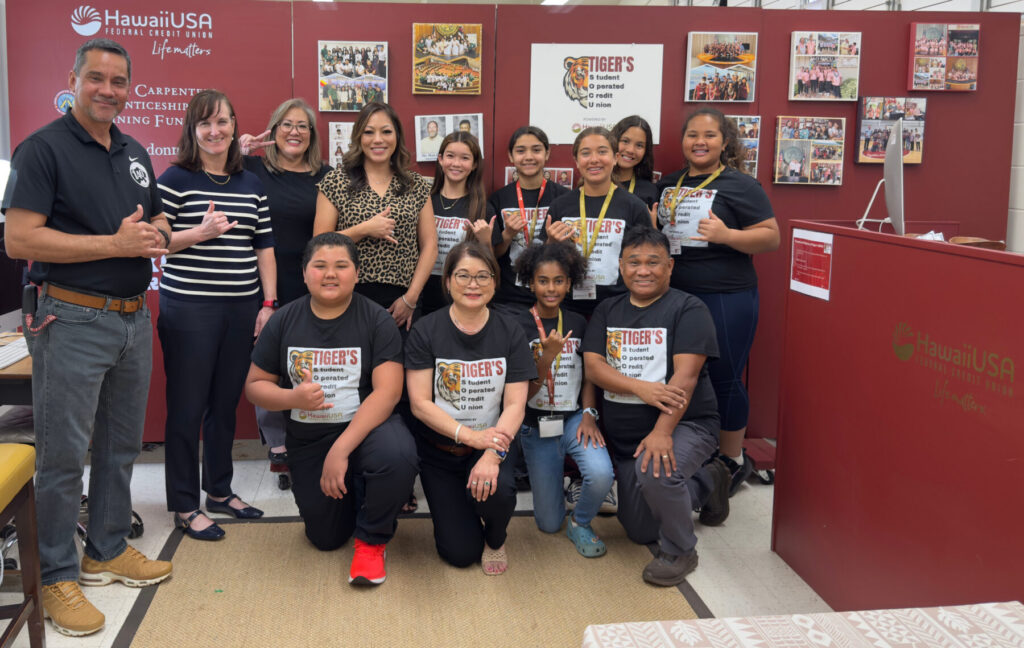
On Maui, the SOCU at ʻĪao Intermediate has been operating for three years and continues to grow.
Seventh grader Siaone Anitema said the program has helped her better understand how to manage her money.
“I learned the 20/30/50 rule where you have 20% (of your income) going to savings, 30% spending and 50% on daily expenses, like food, rent, bills. This concept helps me save money,” said Anitema, who’s in her first year as an assistant branch manager with the SOCU.
Programs like SOCUs are helping public school students across Hawaiʻi build the knowledge and skills they need to make informed financial decisions long after they leave the classroom.