Kimberly McDonald
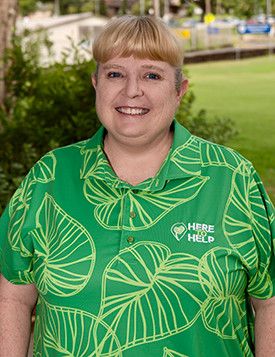
Igoa: Clinical Psychologist
Nofoaga o galuega: Ofisa o Auaunaga Lagolago mo Tamaiti Aoga
Tausaga i le HIDOE: 23
Tausaga i le tulaga: 3
For more than two decades, Kimberly McDonald has helped strengthen student mental health supports across Hawaiʻi public schools. Now, her work is earning national recognition. McDonald, a clinical psychologist with the Office of Student Support Services, is a recipient of the Association for Behavioral and Cognitive Therapies’ 2026 Champions of Evidence-Based Psychological Interventions Award, which recognizes individuals making an impact through the promotion of evidence-based psychological practices.
Q: What was your career path like?
A: My interest in psychology started in my high school psychology class. I focused on developmental psychology with a minor in child studies (early childhood education) in undergrad. Between college and grad school I worked one year at a substance abuse treatment center in my hometown. I then started a Psy.D. graduate program in clinical psychology with an emphasis on child clinical psychology and marriage and family therapy. I completed a one-year internship in Indiana and moved to Hawai‘i for my postdoctoral fellowship at the Kapiʻolani Child Protection Center. I liked Hawai‘i so much, I found a job using my clinical psychology degree with the School-Based Behavioral Health (SBBH) and have loved it since!
Q: How did you get into this field?
A: I became interested in helping others after watching many of my friend’s parents divorce. I thought working with parents would be the answer but the more I learned, the more I realized working with kids was better.
Q: O a ou tiute autu?
A: As the clinical psychologist in the Student Well-Being and Mental Health (SWMH) Section, I support the professional development of our staff in a variety of areas, primarily related to evidence-based practices for counseling services with students, families and staff. This includes coordinating our Managing and Adapting Practice (MAP) training and credentialing program in the Department. Iʻm also the lead for Youth Suicide Awareness and Prevention.
Q: Vaega e fiafia i ai e uiga i le galuega?
A: Working with our staff that are passionate supporters and promoters of positive youth mental health growth and development.
Q: Vaega sili ona luitauina e uiga i lou tulaga?
A: Not enough hours in the day to get everything done that I want to!
Q: How does your job support students?
A: While my direct work with students is very limited currently, I support many people that do work directly with students and the training/consultation provided to them helps ensure that the work of others is the most effective and efficient it can be to promote student growth and development.
Q: O le a sau fautuaga mo tagata e mafaufau i lenei tulaga?
A: While supporting students is our primary focus, supporting all the people around those students is also where you will spend a lot of your time and energy. Sometimes it can be frustrating and overwhelming but there is a team available to support you.
Q: Fun fact about yourself?
A: The first time I skated on ice was at the Ice Palace!