By Cassie Nakaoka, Moanalua High School
I have heard that the hardest part of traveling internationally is adjusting to the local customs, unwritten laws, language barriers and a whole new environment. However, the hardest thing is actually adjusting back home after the trip. The realization that the experience is over, that your home does not hold the same cold mornings, some of the friendships you have made are thousands of miles away and all you have are the photos that captured the moment.
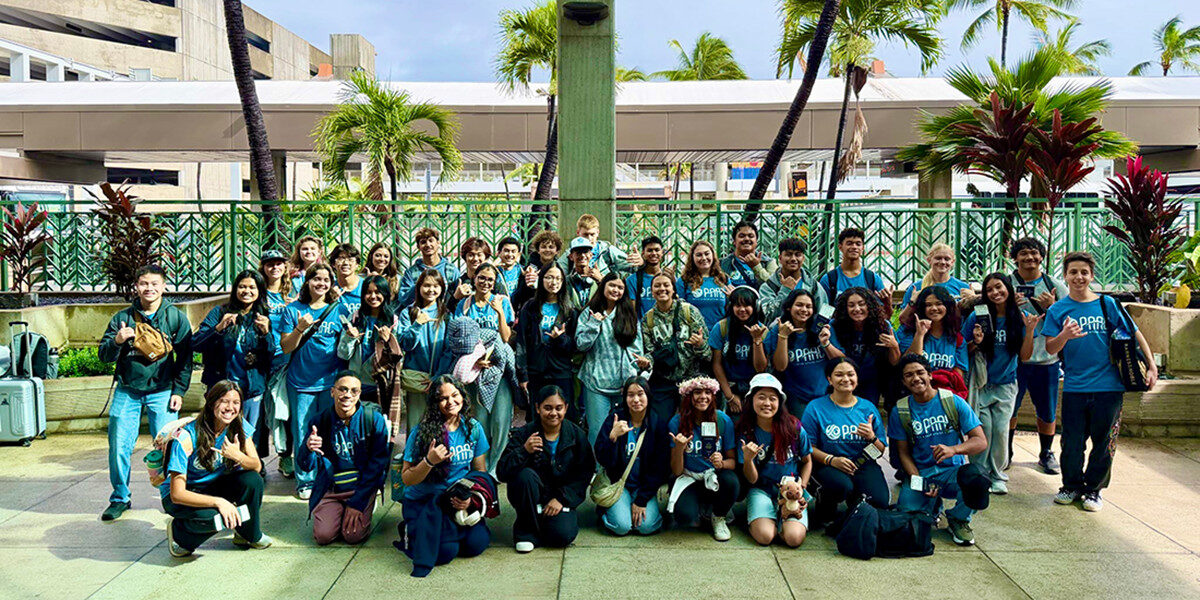
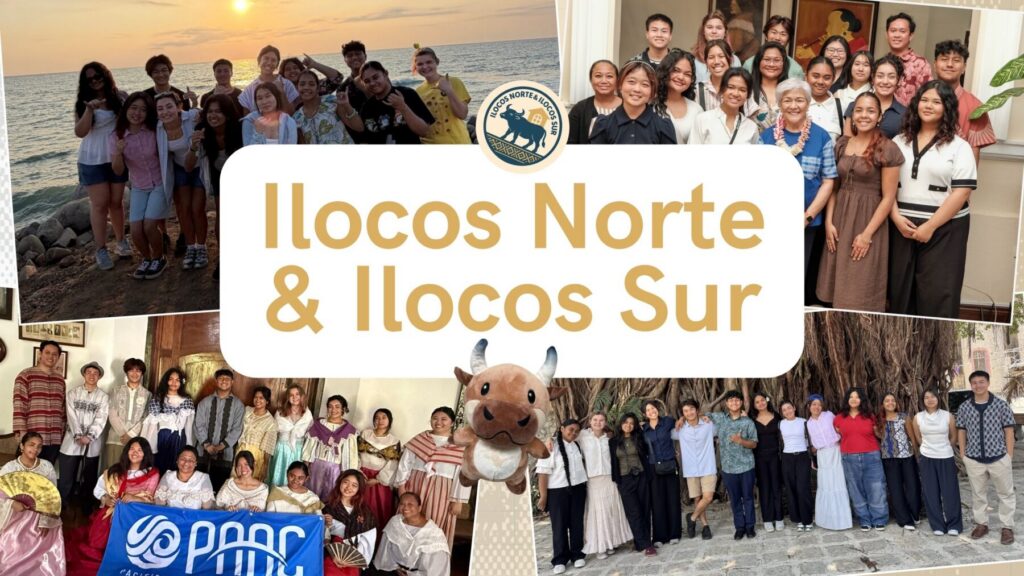
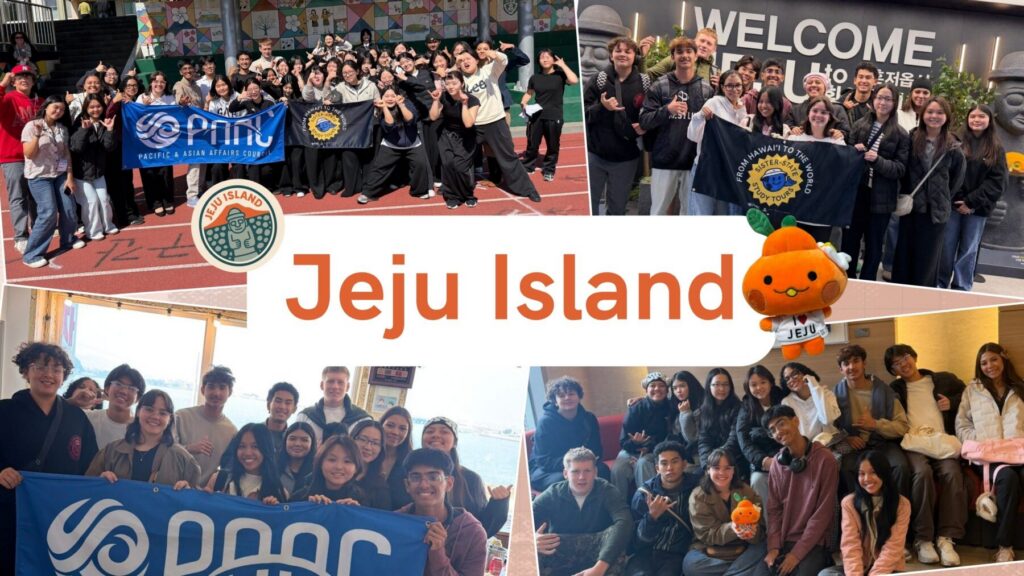
I recently embarked on an 11-day international experience as a Hawaiʻi student ambassador to deepen our Sister-State relationship with Jeju Island, and this experience changed not only my life, but many others’ lives as well. Through a partnership between the Pacific & Asian Affairs Council and the East-West Center, I, along with 41 other public school students from across the state, traveled to Ilocos Sur and Ilocos Norte, Okinawa, or Jeju Island during spring break to engage in their unique culture and strengthen our Sister-State relationship. On the Jeju Island Sister-State Study Tour, we visited many historical museums and landmarks, interacted with government officials and students just like us, and made life-lasting memories.
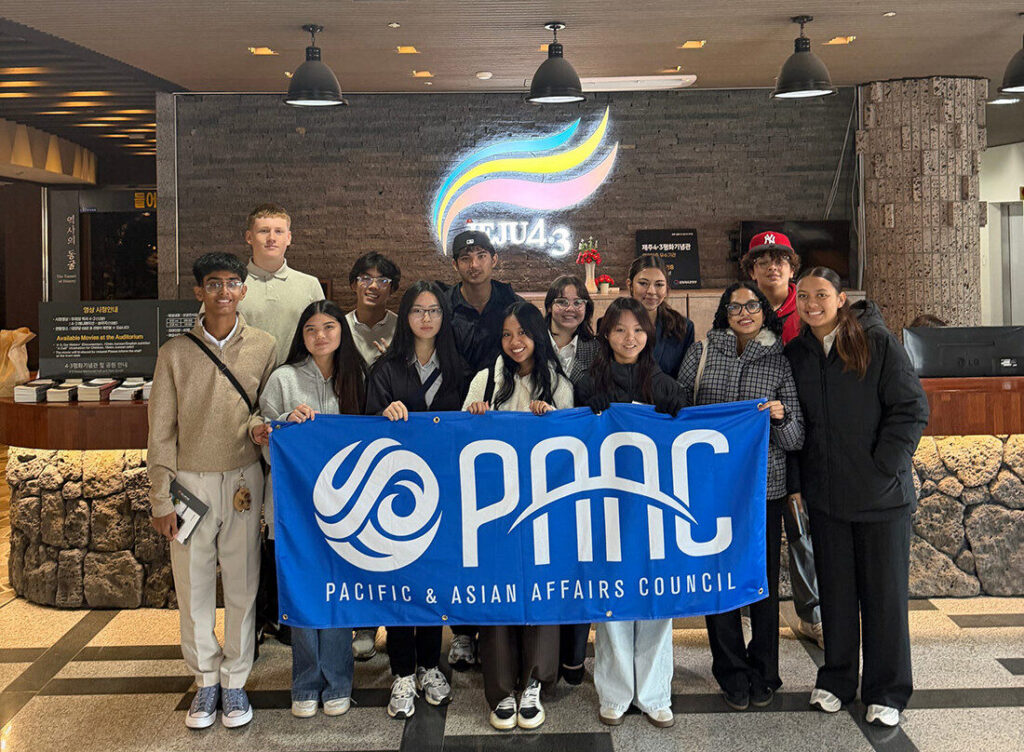
As I am part-Korean, I truly appreciated the educational aspect of this trip, where we learned about the history of the island itself and the timeless traditions that are still preserved in the present day. We visited memorials, like the Jeju 4·3 Peace Park, where we learned about the solemnity of the tragic incident that occurred on Jeju’s soil. Through “scorched earth” tactics, about 10% of the island’s population was wiped out as Jeju was considered a “red island,” a base of communist resistance, causing many innocent lives to be taken. This memorial is an example of why we must acknowledge history, even the tragic parts of it. We must prevent such events from occurring in the future.
As much as acknowledging the mistakes of the past, it is also just as important to preserve tradition and culture. Our travel cohort was lucky enough to experience the Haenyeo diving show, where we observed a tradition where women dive deep in the ocean to collect varieties of shellfish to support their families. Unfortunately, this tradition is slowly fading on Jeju Island since the younger generation does not want to take on the physical or financial risks that come with the job. We also took in some incredible views that held deep cultural meaning to the island and its people, often linking to gods of fortune and good luck, which took me back to my own home, Hawaiʻi. In Hawaiʻi, there are countless natural wonders linked to mythological gods that Hawaiians believe in, such as how Kīlauea is associated with the goddess Pele. She is considered the creator and destroyer who forms new lands through volcanic eruptions. These experiences connecting ʻāina to cultural beliefs and legends on both islands, witnessing a fading traditional practice, and learning about a heartbreaking incident not only gave me a better understanding of Jeju Island’s history, but also how similar Hawaiʻi and Jeju Island are. Thus, strengthening this Sister-State relationship is beneficial to both islands and communities.
Although this experience was primarily an educational trip, the relationships I have made with my travel cohort, the chaperones and many others are what I hold very dearly to my heart. During our trip, we had an exchange with Seogwipo Girls’ High School, where we were assigned a guide and spent a few hours with them. As Hawaiʻi student ambassadors, we displayed the Aloha spirit where we carried the kindness and culture from Hawaiʻi, from sharing the distinct school customs between one another, to exchanging vocabulary in each other’s language. Our entire travel cohort had sparked this genuine relationship with the students where we even had the chance to meet beyond the exchange and create precious memories. This connection that we established proves that though we come from different places, speak different languages, and have different histories, we can all still collectively come together and form such bonds that can strengthen not only ourselves, but the world.
As for my travel group, I understood that getting to know them was inevitable. With 14 public high schoolers coming from the islands of Oʻahu, Hawaiʻi Island, Lānaʻi, Kauaʻi and Mau’i, my initial impression was we were too different to connect. Yet, I found this thought completely wrong. We created a bond that cannot be separated, no matter the distance between us. I have no doubt in my mind that my travel group made my experience the best it could be, from creating inside jokes, to chatting in the hallway of the hotel, or simply enjoying each other’s presence. I not only bonded with my peers, but also the chaperones, whom I am forever grateful were chosen to be on this trip with us. Sharing these bonds with outer island peers helped me further strengthen my belief that connection comes from within, not what’s displayed on the outside, which allows us to receive the best gift: friendships that last forever.
On the last day of our trip, we were pleasantly surprised to learn that we were the first delegation of students from different public high schools tasked to strengthen the connection between Jeju Island and Hawaiʻi. Knowing that my group and I have paved the way for future ambassadors to do the same is something I would not trade for the world. This experience built lasting relationships that will never fade and gave me insight into things beyond my imagination, such as diplomatic opportunities or the covered up history of Jeju Island. I believe that this was so impactful for not only me, but everyone who participated, especially the other Sister-State cohorts.
All three Sister-State cohorts had the privilege to present in front of members of the diplomatic corps, elected officials, educators and community leaders where they shared their journey. Although we all had varied experiences, one message was prominent: Embracing culture, connections and history is a key factor to a successful future.
Consul Sejin Lee from the Consulate General of the Republic of Korea stated, “I was especially impressed by the students who visited Jeju. Their presentation on the insightful connections between Hawaiʻi and Jeju was truly remarkable.”
What is my takeaway you might ask? Giving students from public high schools a chance to see the world beyond Hawaiʻi opens gateways that may never have been found before, which not only benefit one’s self, but also the world, for we are the leaders of tomorrow.
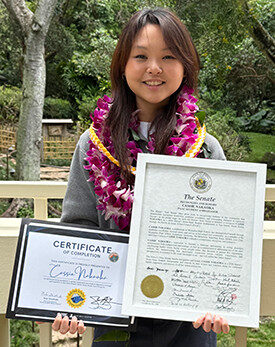
Cassie Nakaoka is a sophomore at Escuela secundaria Moanalua, where she is a part of the Moanalua High School Music Department, participating in both the school’s symphony orchestra and the marching band, and serves as the Class of 2028 vice president. She enjoys being active, whether it be studying in free time, fulfilling her duties in class council, or helping wherever she is needed. She aspires to become a physician, specializing in nutrition/dietetics, and hopes to attend the John A. Burns School of Medicine.