

Every school day matters
Regular attendance helps students learn, build relationships, and stay connected to their school community. When students miss school frequently, they miss instruction, classroom activities and opportunities to learn with their peers.
The Department works in partnership with students and families to support regular attendance and address barriers that may make it difficult for students to attend school.
What is regular attendance?
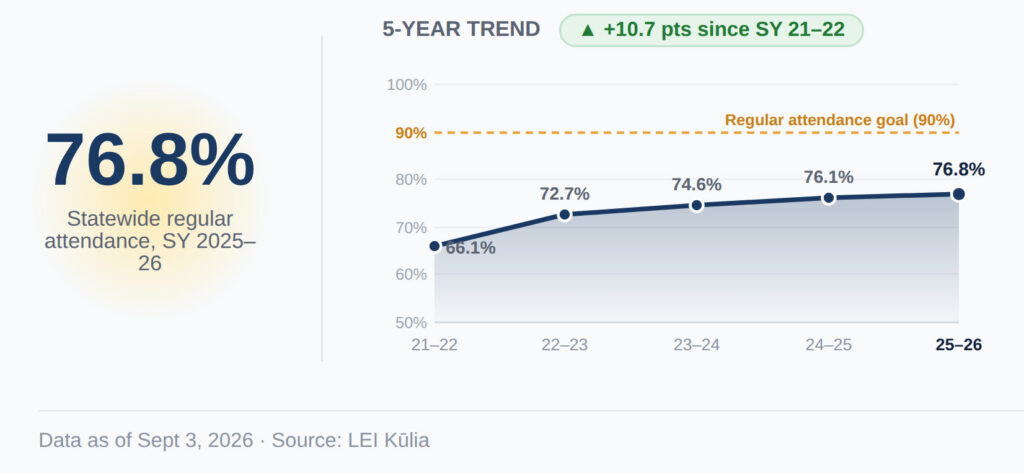
Regular attendance means attending school at least 90% of the time, or missing no more than 17 days during the school year, including excused and unexcused absences.
Missing just two days a month can add up to 17 or more days over the course of a school year. Families do not need to wait until absences become a serious concern to ask the school for help.
Where we stand
Why attendance matters
Students who attend school regularly have more opportunities to:
- Keep up with classroom instruction and assignments.
- Develop strong reading, writing, math, and other academic skills.
- Build relationships with teachers and classmates.
- Participate in school activities and feel connected to their school.
- Stay on track for promotion and graduation.
Data shows students who regularly attend school tend to have stronger academic and graduation outcomes than students who do not regularly attend.
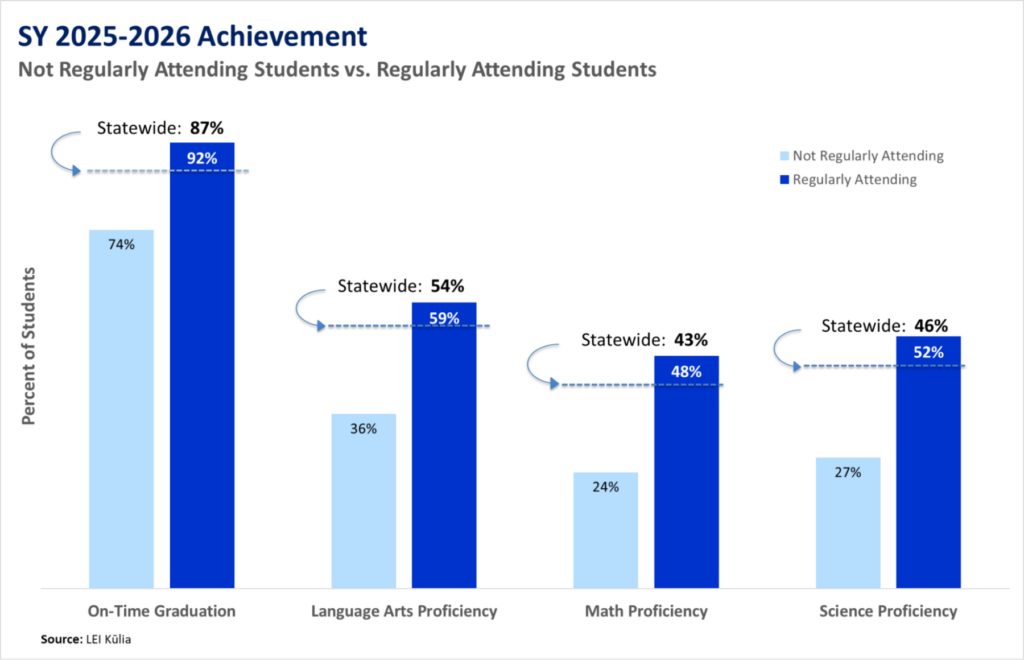
Data as of Sept 3, 2026 · Source: LEI Kūlia
View full Strive HI Dashboard for every school’s data and trends
When your child needs to be absent
Notify the school and follow its procedures for reporting and documenting the absence.
If health, transportation, housing, family circumstances, or other challenges are affecting attendance, contact the school as early as possible — staff can help identify supports.
How families can support regular attendance
Simple routines help: consistent bedtime and morning routines, preparing the night before, and scheduling appointments and family activities outside of school hours when possible.
Resources for Families
See and Track Your Child’s Attendance
Infinite Campus Parent Portal
Personal Daily Attendance Tracker, SY 2026–27 (PDF)
How schools support attendance
Schools closely monitor attendance so they can quickly identify when a student misses days, reach out to the family, and offer the right level of support.
- Creating welcoming communities: safe, positive environments where students feel they belong.
- Assisting families in transition: targeted help for students experiencing homelessness or unstable housing.
- Promoting physical health: health room services and community health information.
- Connecting with families: clear updates on attendance and coordinated support.
- Supporting mental health: counseling and well-being resources.
Hawaiʻi school attendance law
Unless a legal exception applies, Hawaiʻi law requires all children who are at least 5 years old on or before July 31st of the school year, and who will not have reached age 18 by January 1st of that school year, to attend a public or private school.
Learn more: State law — Compulsory attendance law, Hawaiʻi Revised Statutes 302A-1132
Board of Education policy: Policy 106-3: Compulsory School Attendance
Student Voices and Success Stories
PSA videos from Pearl City Elementary, Nānākuli Intermediate, and Kaimukī High School deliver a positive message tailored to elementary, middle and high schoolers.