
Giáo dục nghề nghiệp và kỹ thuật (CTE) affords opportunities to all students interested in acquiring the academic, technical and employability skills necessary to succeed in post-high school education and/or high-demand careers. We envision a sustainable future in which Hawaiʻi graduates can live Và thrive in Hawaiʻi by being prepared to succeed in high-skill, high-wage Và high-demand occupations.
The mission of CTE is to serve our schools Và the greater community by designing quality CTE programs that meet the needs of Hawaiʻi’s labor workforce—inclusive of new pathways Và programs of study, industry standards, work-based learning, industry recognized certifications, dual credit opportunities Và professional development—as well as to ensure equity of access, Và increase participation rates Và successful outcomes.
Career Pathways
Bối cảnh CTE
The impetus for expanding the CTE Career Pathways was directly related to:
- Sự đi qua của Perkins V, which provided clearer language on CTE course rigor Và alignment of secondary Và post-secondary education with the workforce.
- Những phát hiện từ kho khóa học CTE trước đây cho thấy chỉ có 44 trong số 77 khóa học sử dụng các tiêu chuẩn của ngành.
- Uncertainty over whether CTE offerings were vertically aligned with post-high school education and fully aligned with Hawaiʻi economic Và workforce priorities.
An alignment study utilized state economic Và workforce data to determine high-skill, high-wage Và high-demand occupations for Hawaiʻi along with the stateʻs economic priorities Và initiatives. The results were used to inform the selection of CTE programs to meet the needs of the alignment study. This led to the expansion from six CTE Career Pathways to 13 Và the redesign of the CTE programs of study.
The redesigned Career Pathways include:
- Revision of courses, program of study industry course standards, Và recommended benchmark student learning activities to support deeper learning Và the acquisition of academic, technical and employability skills.
- A robust approach to work-based learning (WBL) consisting of embedded WBL benchmark activities that are aligned to standards Và a capstone WBL course for each program of study.
Tham khảo Dòng thời gian triển khai lộ trình CTE (PDF) để biết thêm thông tin về việc triển khai.
Mục tiêu của Pathway
Những câu hỏi thường gặp
When should Career Pathways be used?
Career Pathways provide an ideal organizing tool at all educational levels—kindergarten through college—to guide career exploration Và planning activities, focus teaching Và learning, Và connect education with relevant, real-world activities.
How can Career Pathways be used?
Các Career Pathways are a tool for career awareness, exploration, preparation Và training for all students K-12. Introducing students to broad career pathways, Và the numerous career clusters Và occupations within, expands their career possibilities. Older students may also find the interest inventory test (RIASEC (PDF)) helpful in exploring Career Pathway options.
At the secondary Và post-secondary levels, Career Pathways provide industry standards that meet business Và industry requirements.
Pathways Và Programs of Study by District Và School (Google Sheet)
Students may attain mastery of all specific Career Pathway course standards by completing a Program of Study, which spans four years at the high school level. Programs of Study are designed to:
- Integrate academic standards, career and workplace skills, Và specific business Và industry validated standards;
- Incorporate work-based learning, industry recognized credentials, Và early post-high school opportunities where feasible Và appropriate; Và
- Prepare students for further education and/or employment.
Chương trình học
Hawaiʻi State Department of Giáo dục has 13 Career Pathways Và Chương trình học:
Cultural Arts, Media Và Entertainment
- Thiết kế số
- Fashion Và Artisan Design
- Film Và Media Production
Business Management, Finance Và Marketing
- Quản lý doanh nghiệp
- Khởi nghiệp
- Quản lý tài chính
- Quản lý tiếp thị
- Supply Chain Và Logistics Technology
Dịch vụ chăm sóc sức khỏe
- Dịch vụ Y tế Công cộng
- Dịch vụ chẩn đoán
- Dịch vụ y tế khẩn cấp
- Dịch vụ trị liệu hiệu suất con người
- Dịch vụ điều dưỡng
Agriculture, Food Và Natural Resources
- Hệ thống động vật, Hệ thống thực phẩm
- Kinh doanh tài nguyên thiên nhiên
- Quản lý tài nguyên thiên nhiên
Giáo dục
- Chuyên gia hỗ trợ học tập (LSP)
- Giảng dạy như một nghề nghiệp (TAP)
Hospitality, Tourism Và Recreation
- Nghệ thuật ẩm thực
- Sustainable Hospitality Và Tourism Management
Law Và Public Safety
- Dịch vụ thực thi pháp luật
- Fire Và Emergency Services (FES)
- Tiền luật
Information Technology Và Digital Transformation
- Trí tuệ nhân tạo (AI)
- Lập trình
- Mạng lưới
- An ninh mạng (Cyber)
- Web Design Và Development (WDD)
Building Và Construction
- Mechanical, Electrical, Và Plumbing (MEP) Systems
- Residential Và Commercial Construction
Sản xuất tiên tiến
- Automation Và Robotics Technology
- Electro-Mechanical Technology
- Hàn
Năng lượng
- Công nghệ nhiên liệu thay thế
- Công nghệ lưới điện
- Công nghệ năng lượng tái tạo
Architectural Design Và Engineering
- Thiết kế kiến trúc (AD)
- Công nghệ kỹ thuật
Dịch vụ vận chuyển
- Aeronautics: Aviation Và Unmanned Aircraft Systems (UAS)
- Automotive Maintenance Và Light Repair (MLR)
- Sửa chữa va chạm ô tô
- Công nghệ bảo dưỡng hàng không
- Công nghệ bảo dưỡng hàng hải
Yêu cầu về Giấy chứng nhận công nhận danh dự
In addition to meeting the requirements for the Hawaiʻi high school diploma, a student must meet the following requirements with a cumulative GPA of 3.0 Và above:
- Hoàn thành chuỗi hai khóa học trong Chương trình CTE hoặc Chương trình học đã được phê duyệt.
- Đạt điểm B trở lên ở mỗi khóa học trong chuỗi hai khóa học.
- Đạt hoặc vượt mức thành thạo trong Đánh giá dựa trên hiệu suất cho Chương trình hoặc Chương trình học tương ứng.
The CTE Performance-Based Assessments (PBAs) evaluate students’ abilities to apply the academic and technical skills Và knowledge they have learned in their CTE Programs of Study. The PBA is conducted by a school or by a school district. The PBA includes three components:
- Technical writing.
- Trình bày miệng.
- Đánh giá hiệu suất.
Hội đồng tư vấn Pathway
Pathway Advisory Council (PAC) members advise the Department on the skills, knowledge, tools, technology Và tasks needed in today’s careers. The PAC objectives are to:
- Provide industry-specific expertise to inform student technical skills learning in CTE programs of study Và the associated industry standards.
- Create linkages between industry, high school Và post-high school education.
- Enhance the industry and technical skills experiences of CTE educators.
- Provide collaborative opportunities for input Và consultation.
Career and Technical Student Organizations
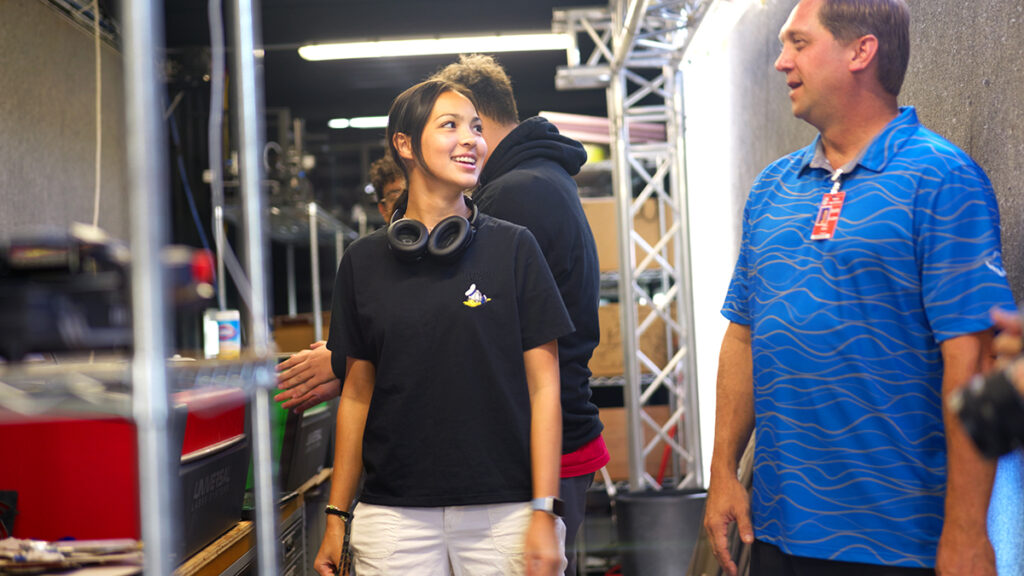
Career and Technical Student Organizations (CTSOs) are an integral component of CTE classroom curriculum Và instruction. They develop employability and career skills by engaging students in applied learning experiences.
CTSOs enhance learning by providing opportunities for contextual instruction, leadership Và personal development, Và real world application. Through activities, programs Và competitive events, CTSOs help guide students in selecting a career path or program of study, Và provide opportunities to gain the skills Và abilities needed to be successful in those careers. In addition, students have opportunities to hold leadership positions at the local, state Và national levels Và attend leadership development conferences to network with other students Và business Và industry partners.
The Hawaiʻi State Department of Giáo dục currently has five CTSOs:
- DECA
- Family, Career and Community Leaders of America (FCCLA)
- FFA (trước đây gọi là Future Farmers of America)
- HOSA — Chuyên gia y tế tương lai
- Kỹ năng Hoa Kỳ
Thông báo hàng năm
Prior to the beginning of each school year, each high school offering a CTE program must advise students, parents, employees Và the general public that all vocational opportunities will be offered without regard to race, color, national origin, sex or handicap. This Thông báo thường niên (PDF) được dịch sang 14 ngôn ngữ khác nhau.
Tài nguyên liên quan đến CTE
Những điều sau đây có liên quan đến việc thực hiện CTE:
Elementary Lesson Plans
The Department’s Office of Curriculum Và Instructional Design, Giáo dục nghề nghiệp và kỹ thuật (CTE) program has created career-connected lesson plans for use in elementary schools.
RIASEC Test for Career Pathways
RIASEC codes are a way of classifying people according to their interests so that they can be matched with appropriate careers. The system was developed by Dr. John L. Holland, an academic psychologist. Dr. Holland’s theory proposes that there are six broad areas into which all careers can be classified. These same six areas can be used to describe people, their personalities Và interests. For instance, “Building” careers are those that involve working with tools or machinery (e.g., carpenter, mechanic or airline pilot). People with building interests typically like working with their hands Và creating a tangible product.
Trường học Và individuals may use the Kiểm tra RIASEC (PDF) without permission from the Department, provided they are using the resource for educational purposes.
Hawaiʻi Academies
Hawaiʻi Academies provide systematic support to meet HIDOE’s vision Và mission by expanding Smaller Learning Communities (SLCs) in Hawaiʻi to prepare all students for college and careers. Learn more about member schools Và the career academy themes they are designed around by clicking on the header.
Hawaiʻi Career Explorer
Hawaiʻi Career Explorer is an online tool from the University of Hawaiʻi Community College System that provides information on the credits, certificates Và degrees that are available related to various careers.
Quân đoàn huấn luyện sĩ quan dự bị cấp dưới (JROTC)
Các Quân đoàn huấn luyện sĩ quan dự bị cấp dưới (JROTC) is a four-year CTE elective program of instruction cost-shared by the U.S. Army, Navy, Air Force Và Marine Corps. Two consecutive JROTC courses fulfill the CTE two-credit requirement for a high school diploma.
The curriculum is designed to teach high school students the value of citizenship, leadership, personal responsibility Và teamwork, while instilling self esteem, self discipline Và a sense of accomplishment. JROTC cadets earn advanced rank when enlisting into any branch of the military, Và advanced opportunities for federal/military academy appointments Và ROTC college scholarships. JROTC is not a military recruiting program; cadets will not incur any military obligation upon completion of the program.
JROTC is a service to our nation, in that it provides cadets the motivation Và skills to improve physical fitness, remain drug free, think critically Và creatively, communicate effectively, work as a team member, graduate from high school, pursue meaningful careers, Và become successful citizens.
Để biết thêm thông tin, vui lòng liên hệ LTC (đã nghỉ hưu) Edgar Rivera.