
The Hawaiʻi State Department of 教育 (HIDOE) provides services to children ages 3 through 21, residing in Hawaiʻi, who are eligible for 特殊教育 及相關服務。 Special education is specially designed instruction, related services, and other supplementary aids to meet your child’s unique needs—at no cost to parent(s).
概述
Special education refers to a range of services provided your child with disabilities to improve their educational outcomes. It is specially designed instruction to meet the unique needs of your child with disabilities. Special education may include, but is not limited to, academic services, speech-language services, psychological services, physical and occupational therapy, counseling services, and parent education. In addition, 特殊教育 services are provided at no cost to parent(s). Find out if 特殊教育 Is it for your child? (PDF).
Special education services are made available to any student — ages 3 through 21 — who demonstrates a need for specially designed instruction after an eligibility determination. An evaluation will determine the nature and extent of the student’s needs. Evaluations are separate assessments that may include: academic performance, communication skills, general intelligence, health, vision, hearing, social and emotional status, and motor abilities. If your child is eligible for 特殊教育, services are provided through an Individualized 教育 Program (IEP).
The federal Individuals with Disabilities 教育 Improvement Act of 2004 (IDEA) and state regulations require the HIDOE to provide a free appropriate public education (FAPE), which includes a continuum of services for your child who is eligible for 特殊教育 及相關服務。
評估與資格
Special education is intended for students who have disabilities that cause difficulty in learning and need specialized instruction.
Evaluation is defined as the procedures used to determine if your child has a disability and the nature and extent of the need for 特殊教育 and related services. This process helps identify learners who are eligible for 特殊教育 and related services by determining the presence of a disability and the need for 特殊教育 services. There are specific timelines that teams must follow for the evaluation process.
Appropriate referrals for 特殊教育 begins after supportive instructional practices have occurred and the student needs far more than the classroom teacher can provide through general education support. For example, a student who has significant academic and/or behavioral challenges and continues to display a lack of progress despite increasing levels of intervention.
Determination of Disability for 特殊教育
團隊必須:
- 進行評估
- 完成三項測試
- Consider your child’s educational progress and the interaction between the disability
- Determine the educational impact of that disability
- Decide the need for 特殊教育
This important distinction highlights that the disability label alone does not prompt a determination of eligibility for 特殊教育. In the context of 特殊教育 eligibility, the disability label has no standing without reference to impaired educational progress as a result of the disability.
三管齊下的測試
Each prong must be met before the team can determine that if your child is eligible for 特殊教育.
- 第一方面:殘疾 – 您的孩子有殘疾嗎?
- 第二點:不良影響 – Is the disability adversely affecting your child’s involvement and progress in general education?
- 第三點:需要 – Does your child need 特殊教育 and related services due to their disability?
Individualized 教育 Program
An Individualized 教育 Program (IEP) is a written statement about the educational program for your child with a disability. It serves as a management tool to ensure that your child receives the needed 特殊教育 and related services. It can also serve as an evaluation tool when used to determine the extent of their progress toward accomplishing projected goals.
每個 IEP 包括:
- 有關您孩子目前學業成績和功能表現等級的聲明
- 年度目標聲明,包括短期教學目標
- A statement of the specific 特殊教育 and related services to be provided
- The extent that your child will be able to participate in regular educational programs
- 預計開始提供服務的日期以及預計的服務持續時間
- 適當的客觀標準和評估程序及時間表,用於至少每年一次確定目標是否正在實現
Beginning at age 14 (or younger if determined appropriate by the IEP team), the IEP shall include a statement of the transition service needs of your child—under the applicable components of the their IEP—that focuses on their courses of study (such as participation in a vocational educational program).
從您的孩子年滿 16 歲(或更年輕,如果 IEP 團隊認為合適)時開始生效的第一個 IEP 開始,IEP 必須包括:
- 根據適合年齡的過渡評估制定適當且可衡量的中學後目標
- 幫助學生實現這些目標所需的過渡服務(包括學習課程)
- 根據您孩子的個人需求進行適合其年齡的過渡評估,以確定適當的、可衡量的中學後目標
- 從您的孩子達到州法律規定的成年年齡(夏威夷為 18 歲)前一年開始,他們的 IEP 必須包含一份聲明,說明學生已被告知其在 IDEA B 部分下的權利(如果有),這些權利將在您的孩子達到成年年齡時轉移給您的孩子
- A representative of the public agency, other than your child’s teacher, who is qualified to provide, or supervise the provision of, 特殊教育
- 孩子的老師
- 父母一方或雙方/法定監護人
- 您的孩子(如果適用)
- 由家長或機構決定的其他個人
IEP 會議
IEP 會議至少每年需要舉行一次。根據您孩子的需求和進步情況,可能會更頻繁地舉行審查和修訂會議。
雖然 IEP 會議通常由學校發起和主持,但當您認為您的孩子進步不令人滿意或您覺得當前的 IEP 存在問題時,家長可以要求召開 IEP 會議。
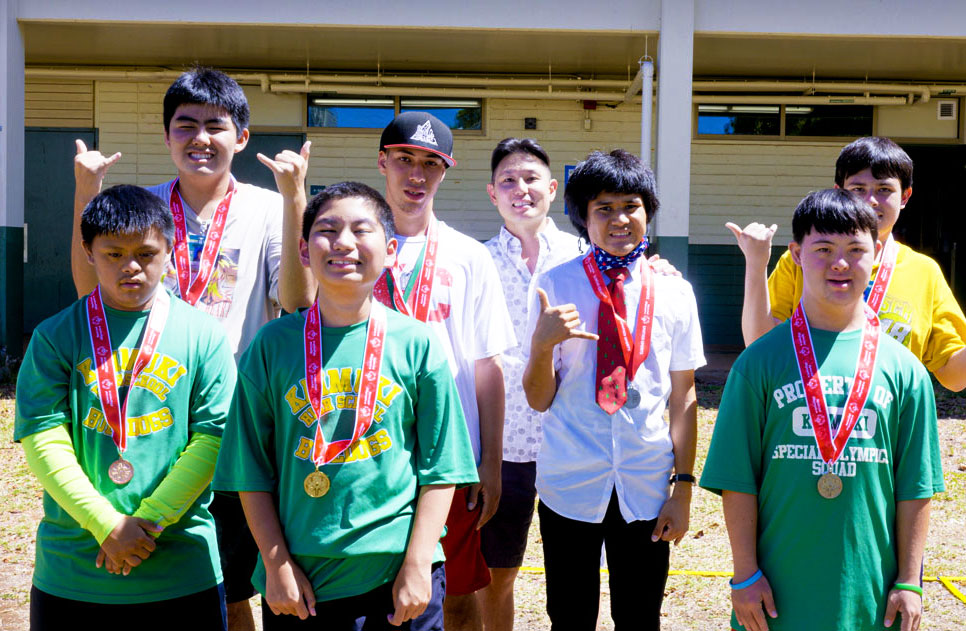
我的孩子有殘疾嗎?
尋找孩子 is HIDOE’s process of identifying, locating and evaluating children and youth who have been identified as or are suspected of having a disability and may need 特殊教育 及相關服務。 If you suspect your child may have a disability, the Department is here to support you through the Child Find process.