By Noah Ching, ‘Aiea High School
Moving to Hawai‘i from California at the age of 4 meant growing up in one of the most culturally diverse places in the world. That diversity became most visible to me through the daily foods that people eat.
As I grew up in Hawai‘i, enjoyed family gatherings, shared school lunches with friends and advanced through the ‘Aiea High School culinary arts program, my heart and mind were opened to the richness of many cultures. Bento boxes, plate lunches, lumpia and manapua were some of the things everyone shared. The many cultures that influenced these cuisines include, of course, Native Hawaiian, Polynesian, Japanese, Chinese, Filipino, Portuguese and American. These cultural groups arrived in Hawai‘i through migration and plantation labor, bringing their own foods and traditions, along with a variety of cooking techniques. Over time, these traditions began to merge into one rather than remain separate.
This blending of cultures is evident in popular local foods that incorporate elements of their culture and methods passed from one generation to the next. Hawai‘i’s cultural diversity has inspired modern-day local cuisines by shaping the flavors, ingredients and cooking styles that define dishes across the islands. For an aspiring chef like myself, understanding this history is not just academic; it is the first step toward cooking with purpose and honoring the many ancestors who built a single, delicious table from so many different hands.
The knowledge contained within these cultural traditions deserves to live on through the next generation. Cooking offers the perfect vessel for passing this inheritance along. Standing in the kitchen together, measuring ingredients and sharing stories creates connections that even textbooks cannot replicate. A grandmother showing a grandchild how to pound taro into poi passes down not just a recipe but an experience that carries generations of history, resilience and identity. The smells, the textures and the patience required all become embedded in memory. Through cooking, younger generations do not simply learn techniques, but younger generations inherit the very soul of a culture. The kitchen becomes a classroom where the past feeds the future, one meal at a time.
Native Hawaiian
The story begins with the Polynesian voyagers who navigated across the Pacific to the Hawaiian Islands over a thousand years ago. These expert settlers brought with them 30 essential “canoe plants” and animals that would form the foundation of Hawaiian life. Most sacred among these essentials was kalo, which they pounded into poi, a fermented staple so central to identity that the word for family, ‘ohana, derives from the taro shoot. The Native Hawaiians developed the ahupua’a system, a sustainable land division from mountain to sea that provided access to taro, sweet potatoes, coconuts and fish. Their traditional cooking method included the imu, which produced iconic dishes like kalua pig and laulau.
Cuisines in the past consisted of anything that Hawaiians could forage on the land and in the sea. They had foods like taro, poi, breadfruit, sweet potatoes, bananas, limu, fish, chickens, pigs and dogs. Today, Hawaiian cuisine still retains aspects of these foods but is now shaped and enhanced by the islandʻs melting pot of cultures. Poke is a good example of a food that was reshaped by different cultures over time. This dish reflects Hawaiian culture through the fish and limu, and can also show Japanese influences from the fish being eaten raw and added to rice with soy sauce and sesame oil, and Chinese roots from the oyster sauce.
A food that was based solely on location due to migration and plantation labor is saimin. This dish has many different Asian influences and very few Hawaiian influences. This Hawaiian cuisine was created solely by workers because it was “originating on plantations, where workers from all immigrant groups worked and lived together…” Today, this foundation endures in the deep respect for local ingredients and the continued presence of poi and fresh fish at every Hawaiian table.
Tiếng Nhật
Japanese immigrants began settling in large numbers in 1885 to work on the sugar plantations, bringing with them a culinary precision that would reshape how Hawai‘i eats. They established rice as the centerpiece of every meal, and most visibly, as the two perfect scoops on any plate lunch. They introduced the bento box, creating Hawai‘i’s love for portable, multi-item meals. From their culinary traditions came saimin, Hawai‘i’s unique noodle soup that blends Japanese ramen with local ingredients, and musubi, the beloved snack that evolved from Japanese onigiri. The sweet, savory flavor of teriyaki has become a local staple, and the Japanese aesthetic of craftsmanship continues to influence new generations of specialty food shops across the islands.
Tiếng Trung Quốc
As some of the earliest plantation laborers who arrived in the 1850s, Chinese workers brought fundamental cooking techniques like stir-frying, deep-frying and roasting. Their most visible contribution is the manapua, a fluffy, filled bun that branched from the Chinese char siu bao. The name of this dish also shows cultural blending, as it is believed that it comes from the Hawaiian phrase “mea ‘ono pua’a,” meaning “delicious pork thing.” Chinese immigrants introduced char siu pork, which became a favorite plate lunch protein, and their noodle soups and dim sum traditions laid the foundation for Hawai‘i’s love of snack-style eating. The wontons in a bowl of saimin are also a direct reminder of the Chinese ancestry brought to the islands.
Filipino
Filipino laborers began arriving in large numbers in the early 1900s, and their cuisine brought bold, savory and sour flavors through the masterful use of vinegar and soy sauce. The cooking method adobo, which is meat braised in vinegar, garlic and soy sauce, became a foundational flavor profile found in home kitchens and plate lunch spots throughout all islands. Lumpia, the crispy fried spring rolls, became an essential dish for many local gatherings. For celebrations, Filipino contributions shine in hearty dishes like crispy pata, sizzling sisig and the colorful dessert halo-halo. This cuisine emphasizes maximizing flavor and texture, and it has become deeply ingrained in Hawai‘i’s local food identity.
Portuguese
In the late 1800s, Portuguese immigrants, mainly from Madeira and the Azores, brought skills that changed Hawai‘i’s mornings and bakeries. Their linguica sausage became so beloved that McDonald’s across the state sells Portuguese sausage and uses it in breakfasts. They introduced the malasada, a pillowy, deep-fried yeast doughnut rolled in sugar, originally created to use up lard and sugar before Lent, but now enjoyed year-round, often filled with tropical flavors like haupia or guava. Portuguese sweet bread and Portuguese bean soup have become local comfort food classics.
American
American influence, particularly during the 20th century and World War II, acted as a unifying force and contributed iconic ingredients and formats. The most famous of these is Spam, the canned meat introduced during the U.S. military occupation. Affordable, shelf-stable and protein-rich, it was eagerly adopted and elevated to iconic status in dishes like the Spam Musubi. The plate lunch itself is key to a working person’s meal of protein, two scoops of rice and a creamy macaroni salad, having emerged from American capitalism meeting multicultural Hawai‘i. Lastly, the ultimate local comfort dish from America is the loco moco, which takes the American hamburger and tops it with a fried egg and gravy, creating something entirely new from familiar parts. It’s a beloved comfort food that has become a true symbol of local tradition.
Cultural Impact
The impact of these diverse culinary traditions on Hawai‘i cuisine cannot be overstated, as each culture arrived with its own ingredients, techniques and tastes, and together they fundamentally transformed what it means to eat in the islands. Native Hawaiians were the base with the land, the fish, the taro and the spiritual connection to food that anchors everything else. Each wave of arrival added another layer, another flavor, another technique, until Hawaiian cuisine became something far greater than the sum of its parts.
Perhaps the most profound impact of these cultures is how they taught Hawaiian food to evolve without losing itself. The cuisine did not simply adopt foreign elements randomly; it absorbed them, adapted them, and made them Hawaiian through the chemistry of daily life on the plantations. Workers who ate together learned to cook together, trade recipes and ingredients across cultural lines out of necessity and curiosity, creating a beautiful blend. A Japanese laborer’s rice ball might get wrapped with Portuguese sausage, as a Filipino worker’s adobo might be seasoned with Chinese oyster sauce, and Hawaiian fish would be dressed with Japanese shoyu and served alongside some American spam. This constant exchange created a culinary vocabulary that belongs to everyone, not to any one person. Today, when someone in Hawai‘i eats a bowl of saimin or reaches for a Spam musubi, that someone would be tasting history and the migrations, hardships, friendships and shared meals that built modern Hawaiian culture. The cultures did not simply influence Hawaiian cuisine but became part of it, creating something the world had never tasted before.
All of this leads back to a single purpose: carrying tradition forward so the next generation can get a taste of where they come from. Arriving in Hawai‘i from California at 4 years old, I did not fully understand the flavors on my plate. I only knew that lunchtime felt like a celebration every single day. For much of my young life, I never truly believed I belonged in Hawai‘i, but as I grew up, I came to love the people around me and the many different cultures that inspired my favorite dishes. That love fills me with pride to be part of a culinary community where every dish I bring to life creates the spirit of ‘ohana – embracing everyone as family and honoring the generations who have shaped the flavors of our Hawai‘i cuisine, regardless of our cultural differences.
Now, as an aspiring chef, I see that the Native Hawaiian foundation teaches respect for the land and the food it provides. The Japanese influence shows precision, patience and the beauty of simple ingredients prepared well. Chinese techniques bring the wok’s fire and the gift of transforming humble pork into something celebratory. Filipino traditions contribute boldness, celebration and the understanding that food brings people together. Portuguese baking demonstrates that some gifts arrive sweet and warm, best shared fresh from the oven. American influences prove that adaptation and practicality have their own kind of wisdom. When combined, these cultures tell the complete story of Hawai‘i, a story of migration, hardship, survival and joy.
Understanding the cultural history behind our food is essential to preserving this legacy. This is why my cooking must honor those who came before. Our food, our story our tradition as one generation cooks, and the next generation learns. Pass on the legacy, and the tradition will live on forever.

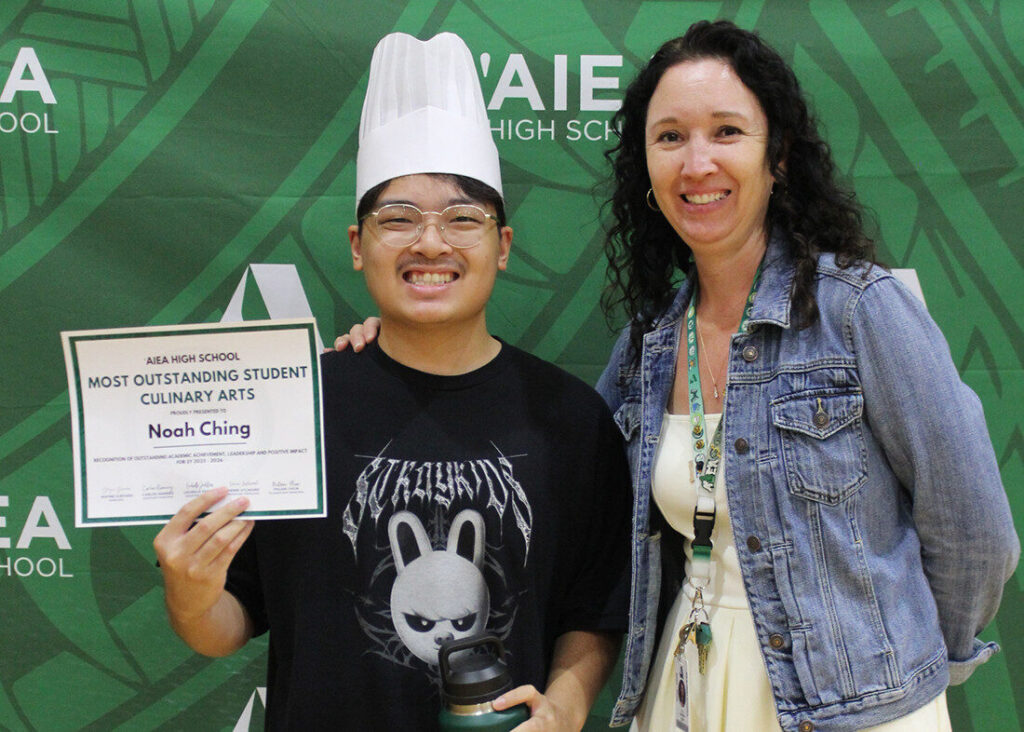
Noah Ching is a senior at ‘Aiea High School, where he serves as student council treasurer and vice president of the Math Club. He was named “Most Outstanding Culinary Student” for AHS and wrote this essay for his senior capstone project. Noah enjoys volunteering at the school’s monthly food distribution and loves experimenting with new recipes. In his free time, he likes gardening and learning about natural resources. He plans to attend Kapi‘olani Community College and hopes to become a chef. His favorite foods are braised pork belly and homemade flan.