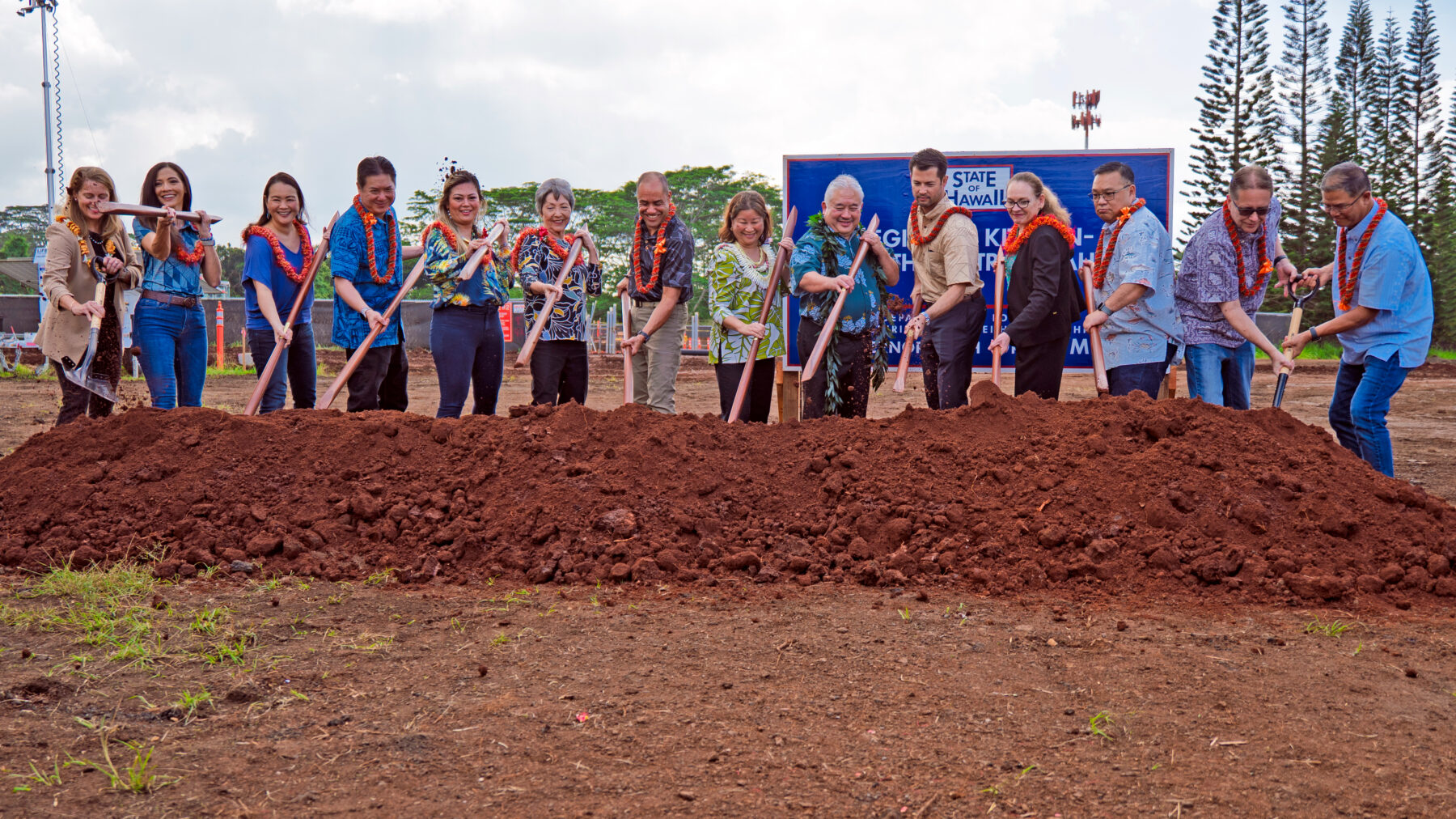
WAHIAWĀ – State and local leaders gathered to break ground on a new regional centralized kitchen facility in Whitmore Village that will modernize school meal preparation, incorporate more locally sourced ingredients and boost efficiency across public school cafeterias.
The regional kitchen is a centralized facility where meals will be prepared in bulk and distributed to schools for final serving, allowing for more quality control and efficiency. This regional kitchen is the first of many under the AINA Kitchen Network, which stands for Advancing Innovation in Nutrition for All.
“This groundbreaking is more than a kitchen — it’s about building a healthier, more resilient Hawaiʻi,” First Lady Jaime Kanani Green said. “Our keiki’s meals are a public health investment — what children eat today will shape their health for decades to come. This facility strengthens the connection between our schools and local farmers, it keeps food dollars in Hawaiʻi, supports our agricultural community, and helps build a food system that can better withstand disruption.”
“What we are starting here in Wahiawā is going to be a model for all of our future expansion,” she added. “It shows where Hawaiʻi is headed — toward practical, forward-thinking solutions, rooted in care for people and place. We can grow this statewide and serve our keiki for generations to come.”
The regional kitchen is expected to begin serving meals to students in the Leilehua-Mililani-Waialua Complex Area in fall 2027.
The Department, which serves over 103,000 meals per day to students statewide, plans to operate up to two regional kitchens on Oʻahu, two on Hawaiʻi Island and one each on Kauaʻi, Maui and Molokai. Standalone production kitchens will continue at Hāna High & Elementary, Kaʻū High & Pāhala Elementary, Lānaʻi High & Elementary and Nāʻālehu Elementary schools.
“This is going to make a huge difference in how we feed our students in the future. The First Lady’s initiative of feeding Hawaii’s keiki is just the beginning,” Senate Ways and Means Chair Donovan Dela Cruz, whose district includes Wahiawā, said. “This is exciting for the community. This is going to create a lot of jobs. This is going to be a model not just for the nation, but, I really think, globally and that’s because of everyone’s efforts.”
Superintendent Keith Hayashi said the AINA acronym reflects exactly what the Department is trying to do.
“The AINA Kitchen Network is a statewide effort to modernize school food service by creating regional kitchens that can serve multiple schools. Instead of every campus doing everything on its own, these kitchens allow us to work smarter, more efficiently, and with greater consistency,” Hayashi said. “Most importantly, this project is about our students. When we invest in how we feed them, we invest in their health, their learning and their future.”
Farming and ranching industry leaders say the facility will help provide the needed assurances for producers to invest in large-scale crops and products to benefit public schools.
“Across all agriculture, one thing matters, and that’s certainty,” said Brian Miyamoto, executive director of the Hawaiʻi Farm Bureau, which connects farmers, ranchers and fishers across the state. “The regional kitchens provide that certainty. It creates dependable, large-scale demand for local fruits, vegetables, cultural crops, meats, eggs, seafood and value-added foods while making it easier for the DOE to buy local, for keiki to enjoy healthier, fresher meals and setting the model for other institutional purchases.”
A phased opening is planned based on availability of legislative funding.
- Phase I will include building an 18,000-square-foot facility that will have the capacity to produce 12,000 meals per shift, or up to 24,000 meals a day with two shifts.
- Phase II will expand the facility to 30,000 square feet and increase the capacity to 20,000 meals per shift, or 40,000 meals per day with two shifts.
- Phase III will reach its full size of 45,000 square feet, capable of producing 30,000 meals per shift, or a total of 60,000 meals per day with two shifts.
Upon completion, the facility aims to serve Central and West O‘ahu, including all students in the Leilehua-Mililani-Waialua; ʻAiea-Moanalua-Radford; Campbell-Kapolei; Pearl City-Waipahu; and Nānākuli-Waiʻanae complex areas at 86 campuses.
The regional kitchen will be part of a larger Central O‘ahu Agriculture and Food Hub complex located on a 34-acre parcel in Whitmore Village in Wahiawā, managed by the Agribusiness Development Corporation, designed to support local farmers and entrepreneurs by pooling services for the aggregation, processing, storage, marketing and distribution of locally produced foods and value-added products.
The design-build contract for Phase I is estimated at approximately $28 million, with the construction cost for all phases estimated at approximately $130 million. The Phase I kitchen is anticipated to be completed in June 2027, ahead of the 2027-28 school year.
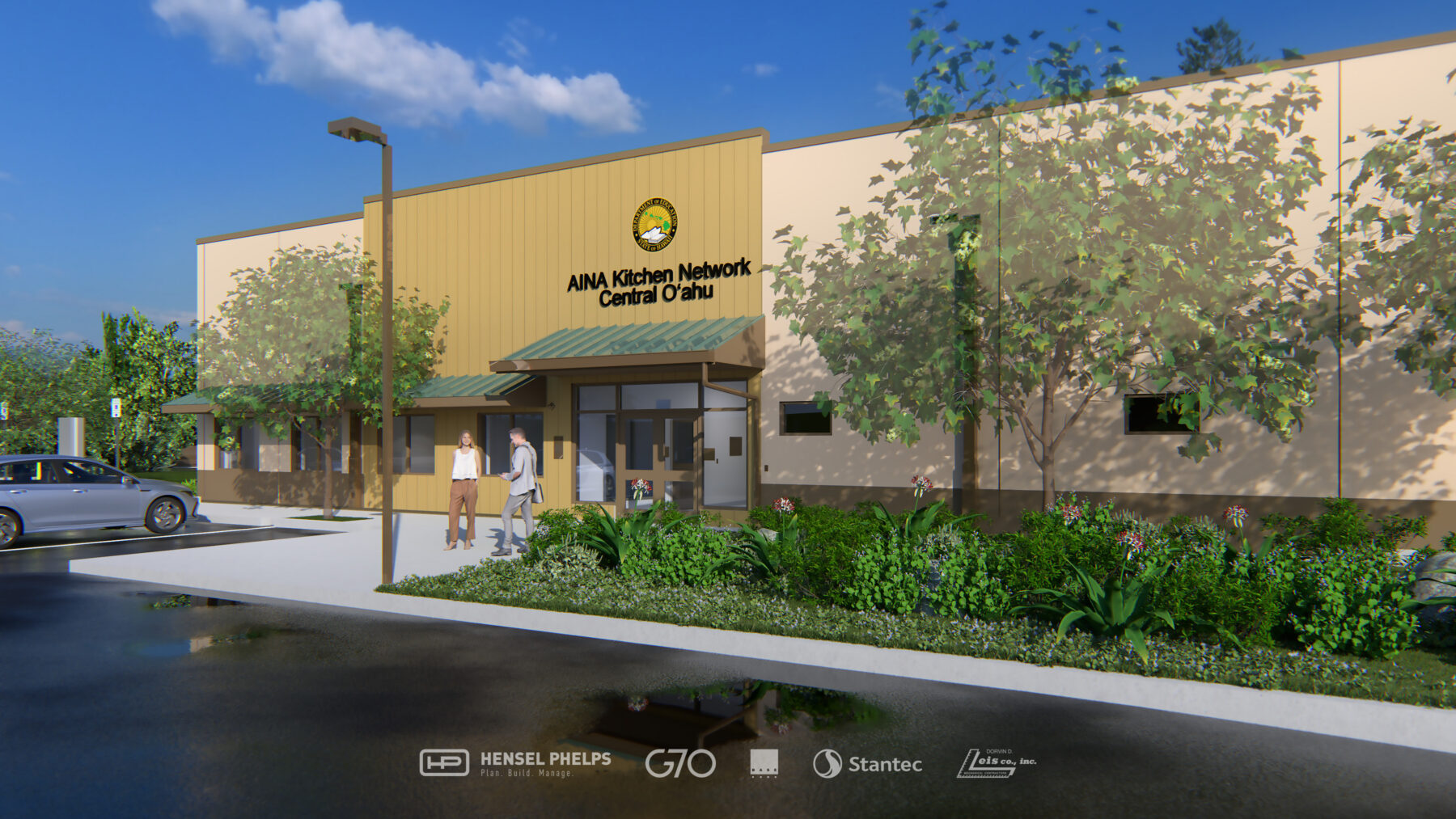
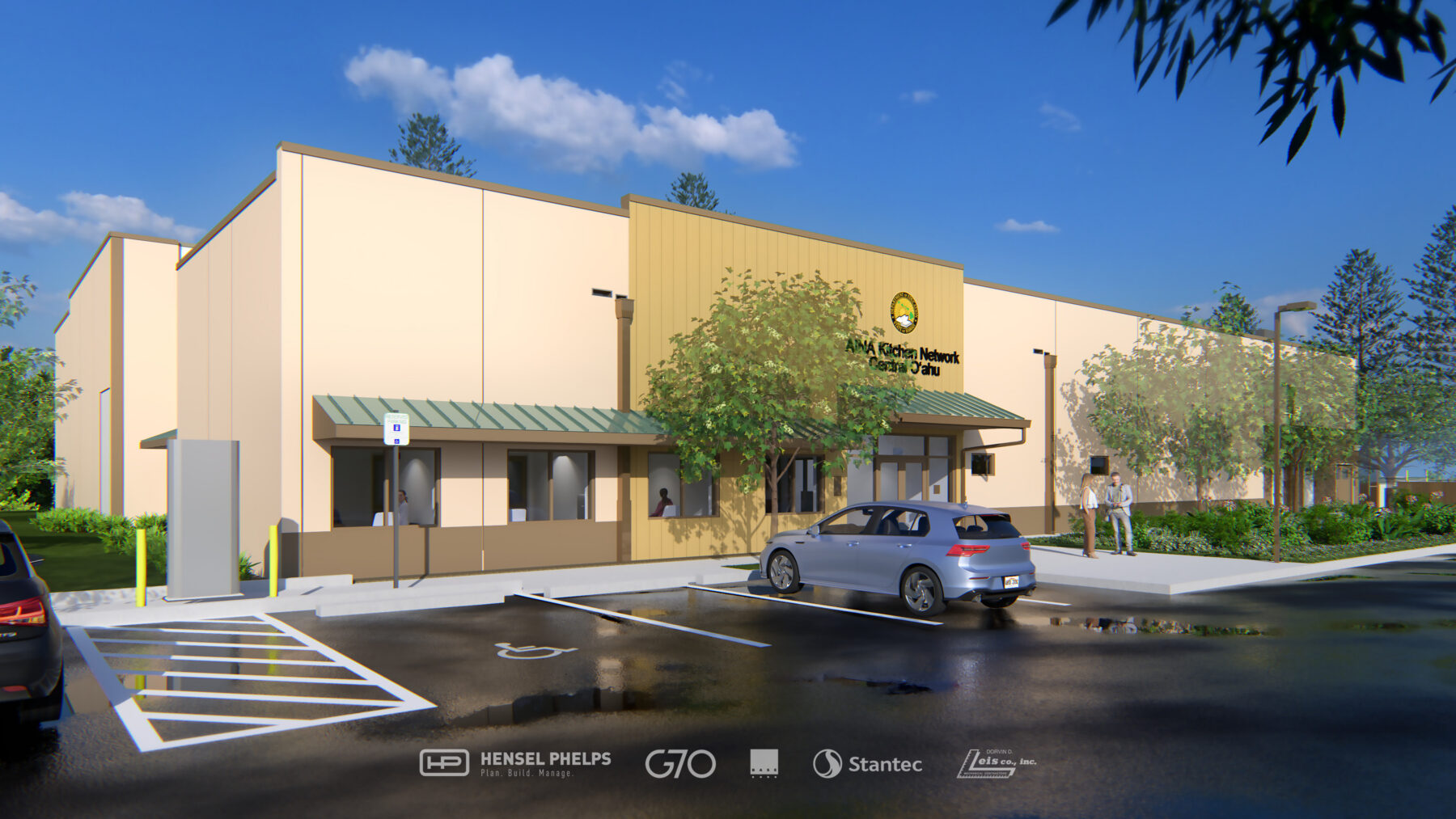
Artist’s renderings of the completed regional kitchen facility.