
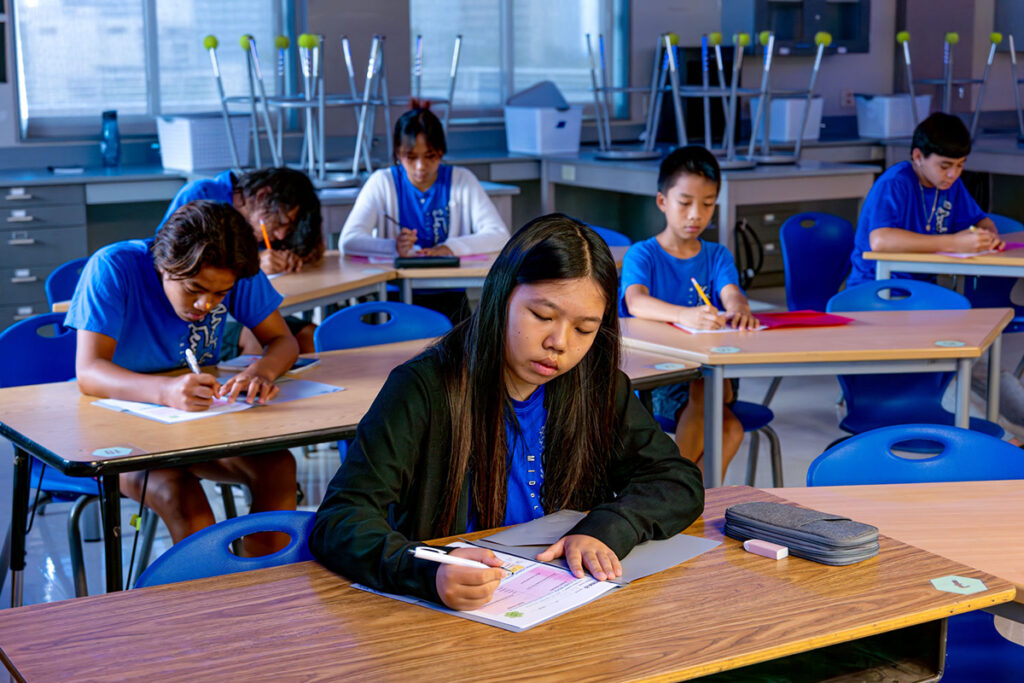
Hoʻāʻo measures student progress during their academic journey. Mandatory assessments are given to students at select grade levels in elementary, middle and high school. There are also targeted exams for Kaiapuni, English Learners, and students with cognitive disabilities.
ʻOi aku ka maikaʻi o ka loiloi kaulike (SBA)
The Smarter Balanced Assessments (SBA) in mathematics and English language arts/literacy (ELA) are aligned to the Hawaiʻi Common Core Standards and designed to measure whether students are “on track” for readiness in college and/or career. These are mandatory assessments given to students in Grades 3-8 and 11.
Hawaiʻi Smarter Balanced Portal
ʻO ka Hawaiʻi Smarter Balanced Portal He kumuwaiwai e kōkua iā ʻoe e hoʻomākaukau no ka Hawaiʻi Smarter Balanced Assessments e pili ana i ka hoʻomaʻamaʻa haumāna, nā hoʻomaʻamaʻa hoʻomaʻamaʻa, nā lā koʻikoʻi a me nā mea hana no nā haumāna, nā ʻohana a me nā kumu.
E pili ana iā SBA
Lawe nā haumāna ma ka Papa 3–8 a me 11 i ka SBA i ka pūnāwai. Loaʻa nā ʻohana i nā hopena i ka hāʻule ma mua o ka hoʻokuʻu ʻia ʻana o nā hopena pae kula a me ka mokuʻāina.
Nā hualoaʻa:
- 2025 results: English Language Arts/Mathematics (EXCEL) | HSA-ʻepekema (EXCEL)
- 2024 hualoaʻa: ʻŌlelo Pelekania Noi/Mathematics (EXCEL) | HSA-Science (EXCEL)
- 2023 hualoaʻa: ʻŌlelo Pelekania Noi/Mathematics (EXCEL) | HSA-Science (EXCEL)
- 2022 hualoaʻa: ʻŌlelo Pelekania Noi/Mathematics (EXCEL) | ʻEpekema (EXCEL)
No nā haumāna, hāʻawi ʻo SBA:
- ʻO nā pilikia paʻakikī a paʻakikī iā lākou e kākoʻo i kā lākou pane me nā wehewehe a me nā hōʻike.
- ʻO ka hiki ke hōʻailona i nā mea hoʻāʻo no ka loiloi, e kākau i nā memo ma kahi notepad kikohoʻe, e hoʻohana i nā calculators a me nā mea hana ʻē aʻe i kekahi mau ʻāpana, a hoʻomaha hoʻi i ka hoʻāʻo.
- ʻO ka manawa kūpono e hoʻokomo ʻia i nā papa ʻaiʻē ma kekahi mau nā kulanui a me nā kulanui, including the University of Hawaiʻi system of colleges. See E hoʻopaʻa i kou ala i ke kula me ka Smarter Balance (PDF)no ka ʻike hou aku.
Hāʻawi nā kumu i nā loiloi hoʻonaʻauao—nā loiloi hoʻonaʻauao liʻiliʻi pinepine—i loko o ka makahiki. Kākoʻo ʻia kēia me Mea Paahana no na Kumu (formerly known as Digital Library) to which our teachers contribute items. Teachers are able to print reports and discuss students’ real-time performance and progress with parents.
No nā loiloi hōʻuluʻulu Smarter Balanced i mālama ʻia i ka pūnāwai, loaʻa i nā kumu nā helu haumāna i loko o ʻelua pule, hiki iā lākou ke hoʻololi i ke aʻo ʻana i nā pule hope o ka makahiki kula. Hāʻawi pū ʻia nā hōʻike i nā kumu aʻo e aʻo ana i nā haumāna i ka makahiki kula e hiki mai ana e kōkua i kā lākou aʻo ʻana.
Parents or legal guardians—including those with disabilities or those who are not proficient in English—may request an alternate format of the report, such as Braille, large print, or an oral translation, by contacting the school or the Mahele Helu.
NUI KIKAIKA: Lawe nā haumāna me ke kino kīnā koʻikoʻi i ka HSA-Alternate exams in ELA/literacy, mathematics and science.
NA HANA EA'E: Test accommodations are any adjustments made to tests or testing conditions that allow students with physical or learning disabilities to demonstrate their true achievement level on standardized exams or other high-stakes tests. Common adjustments include:
- ʻŌlelo hōʻailona ʻAmelika
- Paipalapala a i ʻole kikokikona paʻi nui
- e kākau i kekahi i nā pane hoʻāʻo
- ka hoʻolohe ʻana i ka heluhelu ʻana i nā paukū e heluhelu leo ʻia e ka polokalamu text-to-speech (TTS).
ʻŌlelo HAWAII: No nā haumāna ma Kaiapuni kaia olelo Hawaii schools, the Department and its partners at the University of Hawaiʻi-Mānoa developed the Kaiapuni Assessment of Educational Outcomes (KĀ‘EO) assessments for Grades 3 and 4 in the Hawaiian language. The assessments are aligned to the standards and measure progress toward preparing students for success in college, career and community. The Department has a “double testing” waiver from the U.S. Department of Education in place so Kaiapuni students in those grades do not also have to take the SBA.
Nā ʻāpana Aʻoaʻo Summative
Hana nā haumāna e lawe ana i ka loiloi summative SBA penei:
- He ho'āʻo hoʻololi kamepiula: He ho'āʻo adaptive pūnaewele e hāʻawi ana i kahi loiloi hoʻokahi no kēlā me kēia haumāna.
- He hana hana: Nā hana e ho'āʻo i nā haumāna e hoʻohana i ko lākou ʻike a me nā mākau e pane ai i nā pilikia o ka honua maoli. Hiki ke wehewehe maikaʻi ʻia ma ke ʻano he hōʻiliʻili o nā nīnau a me nā hana e pili pono ana i kahi kumumanaʻo a i ʻole hiʻohiʻona hoʻokahi. Hiki ke helu ʻia kekahi mau mea hana hana e ke kamepiula; e helu lima ʻia ka hapa nui.
ʻAʻole lākou manawa; Hāʻawi ʻia nā haumāna i ka manawa kūpono e pane i nā nīnau āpau. Hiki ke lawelawe ʻia ka SBA i kekahi mau lā.
NA HO'A'O HANA PANEWELA: Loaʻa i nā haumāna, nā kumu a me nā mākua a puni ka ʻāina i nā pūʻulu o nā nīnau loiloi e pili ana i ka Common Core i hiki ke hoʻohana ʻia no ka hoʻomohala ʻana i ka ʻoihana a me nā kūkākūkā me nā mea hana kulekele a me nā mea makemake ʻē aʻe. Loaʻa nā hoʻokolohua hoʻomaʻamaʻa ma kā mākou AlohaHSAP portal. He mau manaʻo wale nō kēia a ʻaʻole e hoʻopili i ka ʻike piha a nā haumāna e hālāwai ai. Eia kekahi, hōʻike ʻia lākou ma kahi "paʻa paʻa" (ʻo ia hoʻi, ʻaʻole hoʻololi kamepiula) a ʻaʻole loaʻa nā mea hoʻohana i nā hōʻike a i ʻole nā helu.
2025-26 Administration
| Nā ʻāpana maʻiʻo | Papa(mau) a i ʻole Track(s) | Hoʻāʻo Window | ||
| Wehe | Pani | |||
| ELA/Literacy & Mathematics | 3-8 a me 11 | 02/17/26 | 05/28/26 | |
| Nā haumāna semester 1 ma nā kula papa hoʻonohonoho WALE | 11 | 11/17/25 | 12/19/25 | |
| Multitrack | 3-8 Melemele | 02/17/26 | 05/28/26 | |
| 3-8 ʻulaʻula, uliuli, ʻōmaʻomaʻo | 03/09/26* | 06/12/26* | ||
* Hiki ke hoʻololi.
Kaiapuni Assessment of Education Outcomes (KĀ'EO)
ʻO ke kumu o ke KĀʻEO ʻo ke kākoʻo ʻana i kahi loiloi kūpono, kūpono a hilinaʻi e hōʻike ana:
- ʻO ka hoʻokō ʻana i nā kula kaiapuni ʻōlelo Hawaiʻi ma nā hana noʻeau ʻōlelo Hawaiʻi, ka makemakika a me ka ʻepekema no ke kumu o ke kuleana o ke kaiāulu a me ke kuleana mokuʻāina a me ke aupuni pekelala.
- He ala kūpono e ulu a hoʻomaikaʻi i ka papahana kaiapuni ʻōlelo Hawaiʻi ma ka papa haʻawina lumi papa, ma ka pae kula, ma nā ʻohana kaiapuni Hawaiʻi, a ma ke kaiāulu ākea.
- ʻO ka hilinaʻi a me ka pono o ke kūkulu ʻana i ke kahua o kahi loiloi i ʻike ʻia e ka ʻike, naʻauao a me ka naʻauao Hawaiʻi.
No ka Hoʻomohala ʻana o KĀʻEO
He oia mau nō ka pono o ka lāhui kanaka i ka naʻauao Hawaiʻi.
ʻO ka ʻōlelo ka hōʻailona o ka ʻike a loaʻa iā ia kahi ʻike o ka wā i hala, kēia manawa a me ka wā e hiki mai ana; "ʻAʻole wale ka ʻōlelo i nā hiʻohiʻona o ka wā i hala akā ke hōʻike pū ʻana i ka pilina pili kanaka, ka pilina pilikino a me ka ʻike kaiāulu, ka nui o ka hoʻonohonoho ʻana i nā ʻike, nā lula e pili ana i ka pilina pili kanaka a me nā manaʻo e pili ana i ke akamai, ka hana, ka ʻepekema, ka mele, ke ola, ka make a me ka ʻōlelo ponoʻī." (Baker, 2011, p.45)
ʻO ke aʻo ʻana i ka ʻōlelo a Skutnabb-Kangas (2009) he ʻōlelo makuahine, e like me ka ʻōlelo Hawaiʻi, he hana ia e launa hou ai me nā kūpuna, ka hoʻomaopopo ʻana i ko ke kanaka wahi i kēia manawa ma ke ʻano he poʻe ʻōiwi, a me ka noʻonoʻo ʻana i ka wā e hiki mai ana o kā mākou ʻōlelo, moʻomeheu a me ke kaiāulu ma o ke aniani ʻōlelo Hawaiʻi. Ua hōʻoia ʻia kēia mau pono a me nā pono e ka United Nations Declaration on the Rights of Indigenous Peoples (2008).
Ua hoʻokomo mua ʻia nā haumāna kaiapuni Hawaiʻi i ka papahana loiloi a puni ka mokuʻāina i kūkulu ʻia ma ka ʻike honua a me ka ʻōlelo i loaʻa mai ka manaʻo nui. ʻO ke kumu nui o ke KĀʻEO, ʻo ia ka hoʻomohala ʻana i ke ana kūpono no ka loiloi ʻana i nā haumāna kaiapuni ma ke kau ʻana i ka moʻomeheu a me ka ʻōlelo ma ke kikowaena o ka papahana loiloi. No laila, i loko o ka hoʻomohala ʻana i ka loiloi, ua kālele ka papahana i ke kūkulu ʻana i kahi loiloi e ʻoi aku ka pili a hiki i ke kākoʻo ʻana i nā haumāna kaiapuni. Ua hoʻokō ʻia kēia no ka mea ʻo nā hana hoʻomohala loiloi āpau - hoʻomohala ʻana i ka framework, kākau ʻikamu, loiloi 'ikamu, ka helu ʻana, a me ka hoʻonohonoho maʻamau - ua hoʻopili ʻia kahi hui kumu a me ke komo ʻana o nā kumu o nā mokupuni. Ua hāʻawi nui kēia mau mea hoʻonaʻauao i ka ʻike e pili ana i ko lākou mau kaiāulu, nā ʻano like ʻole o ka ʻōlelo hoʻonaʻauao, a me nā kumu hoʻonaʻauao i loaʻa ai i kahi kaiāulu o ke kaʻina hana a me ka huahana, ʻo ia hoʻi ka loaʻa ʻana o ke kākoʻo kaiāulu.
Hoʻopili nā haumāna i komo i nā papahana kaiapuni ʻōlelo Hawaiʻi i nā kūlana o ka ʻōlelo Hawaiʻi a loiloi ʻia me ka KĀʻEO.
To fulfill the requirements of the Hawaiʻi State Constitution, the Hawaiʻi State Board of Education adopted Policy 105-8 states: The Kaiapuni Educational Program offers students an education in the medium of the Hawaiian Language. The comprehensive program combines the use of Hawaiian teaching methodologies, language, history, culture and values to prepare students for college, career and to be community contributors within a multicultural society.
Ua ʻōlelo hou kēia kulekele e hoʻomohala ʻo HIDOE i nā haʻawina a me nā kūlana no ka hoʻomākaukau ʻana i nā haumāna no ke kulanui, ʻoihana a me ke kaiāulu.
KĀʻEO Statewide Reporting
Hāʻawi ʻia nā haumāna kula hoʻonaʻauao aupuni a me ka lehulehu ma ka papahana kaiapuni ʻōlelo Hawaiʻi i nā loiloi ʻōlelo noʻeau a me ka makemakika ma ka Papa 3-8 a me nā loiloi ʻepekema ma ka Papa 5 a me 8.
| Wahi maʻiʻo | Papa(mau) | TESTING WINDOW | |
| Wehe | Kokoke | ||
| ʻŌlelo noʻeau a me ka makemakika | 3-8 | 04/01/26* | 05/28/26 |
| ʻepekema | 5 a me 8 | 04/01/26* | 05/28/26 |
* E hoʻololi.
- 2024-2025 (Hawaiian)
- 2024-2025 (English)
- 2023–2024 (Hawaiian) (PDF)
- 2023–2024 (English) (PDF)
Nā hōʻike loea
The Standards for Educational and Psychological Hoʻāʻo (AERA, APA, NCME, 2014) identifies professional standards, criteria and recommendations for test developers and test publishers. One of those standards is to provide sufficient documentation that enables potential test users to evaluate the quality of a test, including evidence for the reliability and validity of test scores. Technical reports provide that documentation.
ʻO ke kaulike ʻoi aku ka maikaʻi
Smarter Balanced Assessments – Hawaiʻi
- 2024-25 Hawaiʻi SB Technical Report (PDF), Appendices (PDF)
- 2023-24 Hawaiʻi SB Technical Report (PDF)
- 2022-23 Hawaiʻi SB Technical Report (PDF)
- 2021–22 Hawaiʻi SB Technical Report (PDF)
- 2020–21 Hawaiʻi SB Technical Report (Google Drive)
- 2018–19 Hawaiʻi SB Technical Report (Google Drive)
- 2017–18 Hawaiʻi SB Technical Report (Google Drive)
Hawaiʻi Assessments in Science
(Papa 5 a me 8 a me Biology 1 Hoʻopau i ka hoʻokolohua)
- 2024-25 NGSS and Biology EOC Technical Report (Google Drive)
- 2023-24 NGSS and Biology EOC Technical Report (Google Drive)
- 2022-23 NGSS and Biology EOC Technical Report (Google Drive)
- 2021–22 NGSS a me Biology EOC Hōʻike ʻenehana (Google Drive)
- 2020–21 HSA Science-Biology Technical Report (Google Drive)
- 2018–19 HSA Science-Biology Technical Report (Google Drive)
Nā hoʻokolohua hope o ka papa (EOC) (Algebra 1 a me Algebra 2)
Hawaiʻi Statewide Alternate Assessment (HSA-Alt)
- 2024-25 HSA-Alt Technical Report (PDF)
- 2023-24 HSA-Alt Technical Report (PDF)
- 2022–23 HSA-Alt Hōʻike ʻenehana (PDF)
- 2021–22 HSA-Alt Hōʻike ʻenehana (PDF)
- 2020–21 HSA-Alt Technical Report (Google Drive)
Kaiapuni Assessment of Educational Outcomes (KĀʻEO)
- 2024 KĀʻEO hōʻike ʻenehana (Google Drive)
- 2023 KĀʻEO Hōʻike Kūikawā (PDF)
- 2022 KĀʻEO Hōʻike Kūikawā (PDF)
- 2021 KĀʻEO Hōʻike Kūikawā (PDF)
- 2019 KĀʻEO Hōʻike Kūikawā (PDF)
- 2018 KĀʻEO hōʻike ʻenehana (Google Drive)
- 2018 KĀʻEO Field Test Technical Report (Google Drive)
Hawaiʻi English Language Proficiency Assessment
(WIDA ACCESS a me kahi ʻē aʻe ACCESS)
E ʻoluʻolu e kelepona i ka Mahele Helu e noi i kope uila o kahi hōʻike loea i helu ʻole ʻia ma luna. E ʻoluʻolu e wehewehe i ka inoa loiloi a me ka makahiki.