
Warrior-athletes, with game faces on, populate an expansive ceramic tile mural wrapping the entry of the Molokai High School gym. Presented Dec. 12, 1975, by artist Mataumu Toelupe Alisa, the mural depicts men in fierce competition. In ancient times, Molokai was the training ground for top makahiki contenders and the gathering place to crown the champion of all islands.
Alisa, a Kahuku High & Intermediate graduate, was one of the first Hawaiʻi muralists of Polynesian descent to represent cultural themes — such as hula, imu preparation, and Hawaiian legends — for perpetuity. “Makahiki – Paʻani Hoʻoikaika O Molokaʻi” was one of his first solo works and took three years to complete.
The rainy season ushers in makahiki — a time of giving thanks to the god Lono for bountiful harvests, feasting and games of athleticism. The mural serves as a snapshot in time showcasing traditional games and honored traditions.
In the largest section, a white flowing banner known as Lono Makua, billows in an unseen wind. The kapa banner was carried from village to village, signaling the start of makahiki season and tax collection. Against the backdrop of ‘āina and kai, athletes compete in heʻe nalu (surfing), heihei waʻa (canoe racing), hukihuki (tug-of-war), mokomoko (boxing) and kākā lāʻau (pole jousting) while chiefs and royalty look on. In total, 10 traditional land and ocean sports are represented across the three panels.
Fifty years after Alisa’s work was unveiled, a makahiki resurgence is taking place. More than 300 students from 13 public, charter and private schools gathered for the annual Kauaʻi Middle School Makahiki Championship.
The event’s organizer, Kaina Makua is executive director of Kauaʻi nonprofit Kumano I Ke Ala. He noted that makahiki training helps students build cultural grounding, work ethic and respect for others. As a staunch proponent of the games in schools, his goal is to use traditional practices to help shape confident, well-rounded leaders, or “good humans” for a new generation.
Makua also portrayed Kamehameha in the series “Chief of War.” The series gave him a platform to shine a light on traditional Hawaiian games and their importance to a broad audience. He hopes to gain traction to reestablish statewide games in the coming years.
Half a century later, the artistic imagery captured in “Makahiki – Paʻani Hoʻoikaika O Molokaʻi” is now a vision of the future.
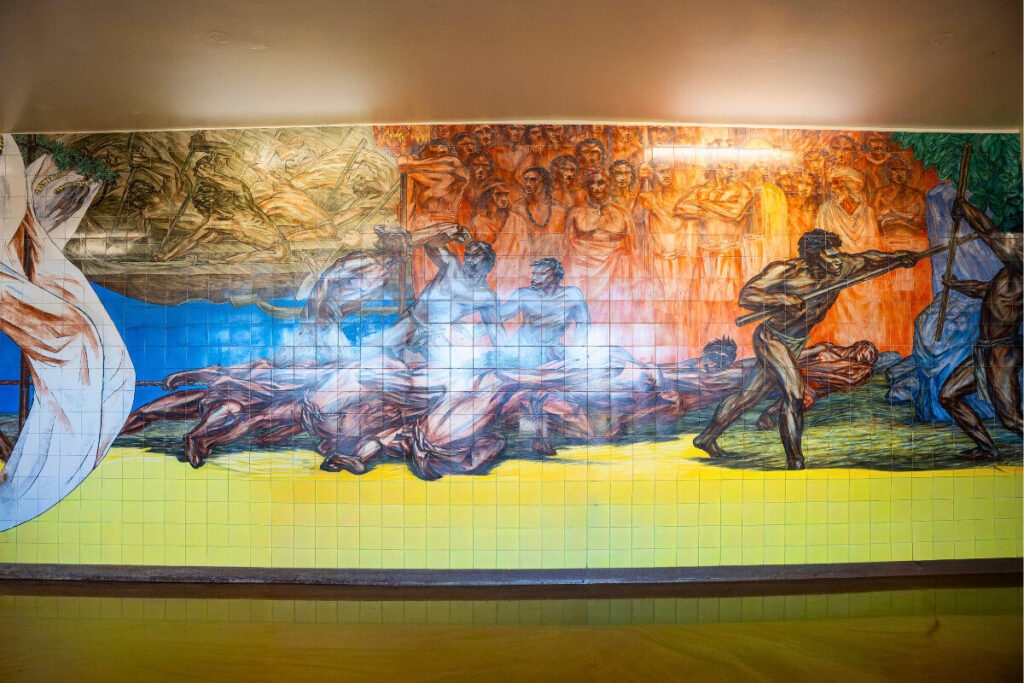 The largest panel depicts a white flowing banner known as Lono Makua and various land and ocean sports
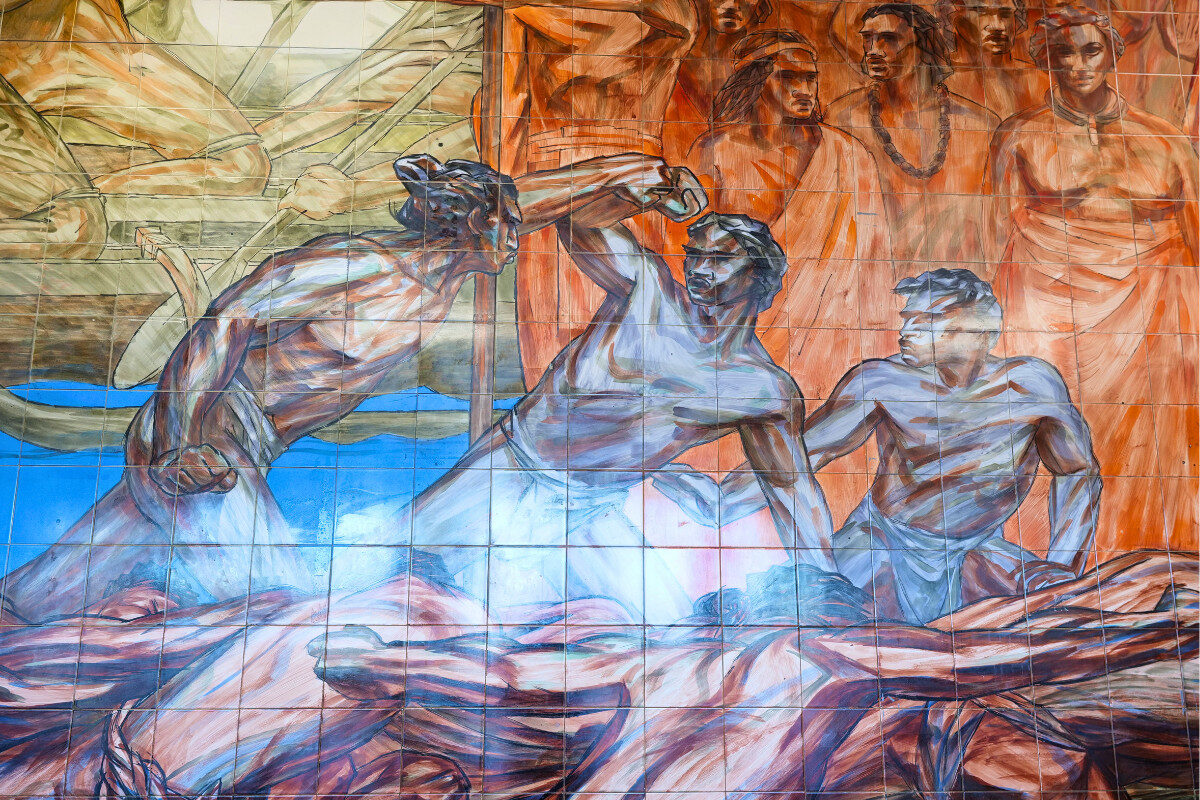 Two men fiercely battle in mokomoko (boxing)
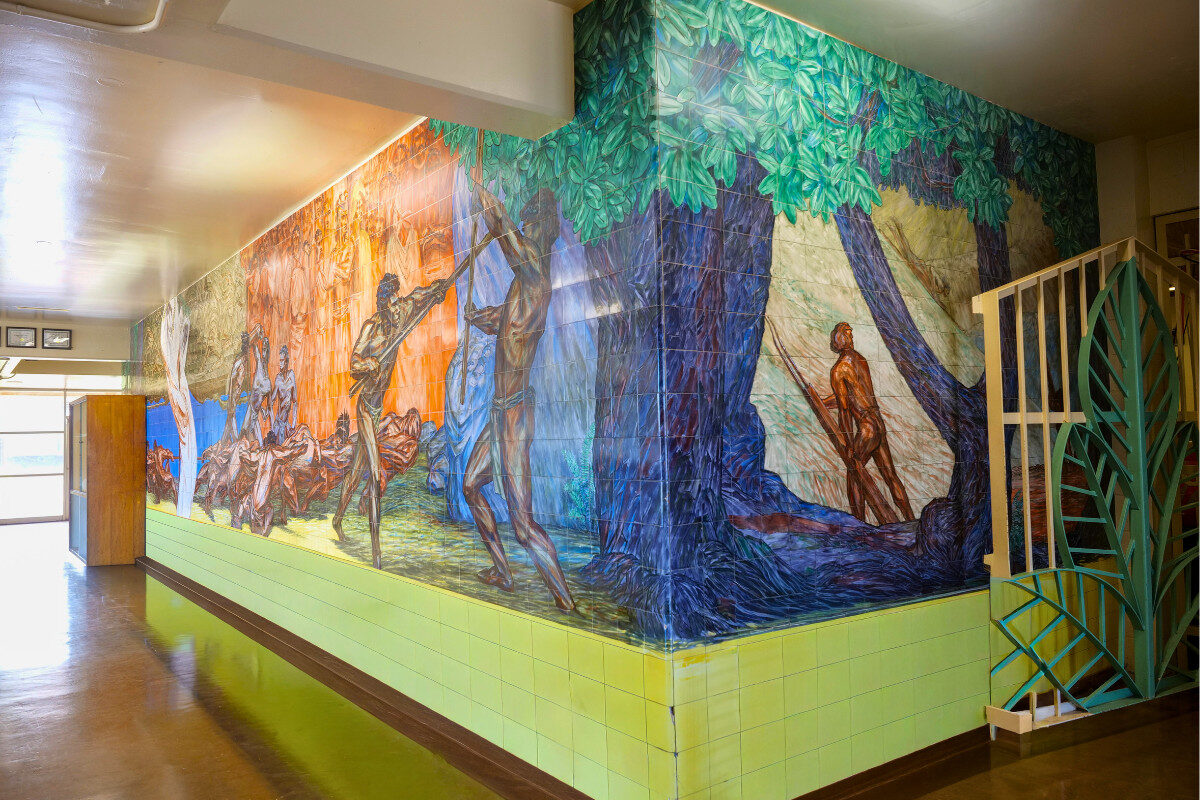 The expansive mural wraps around the gym entrance
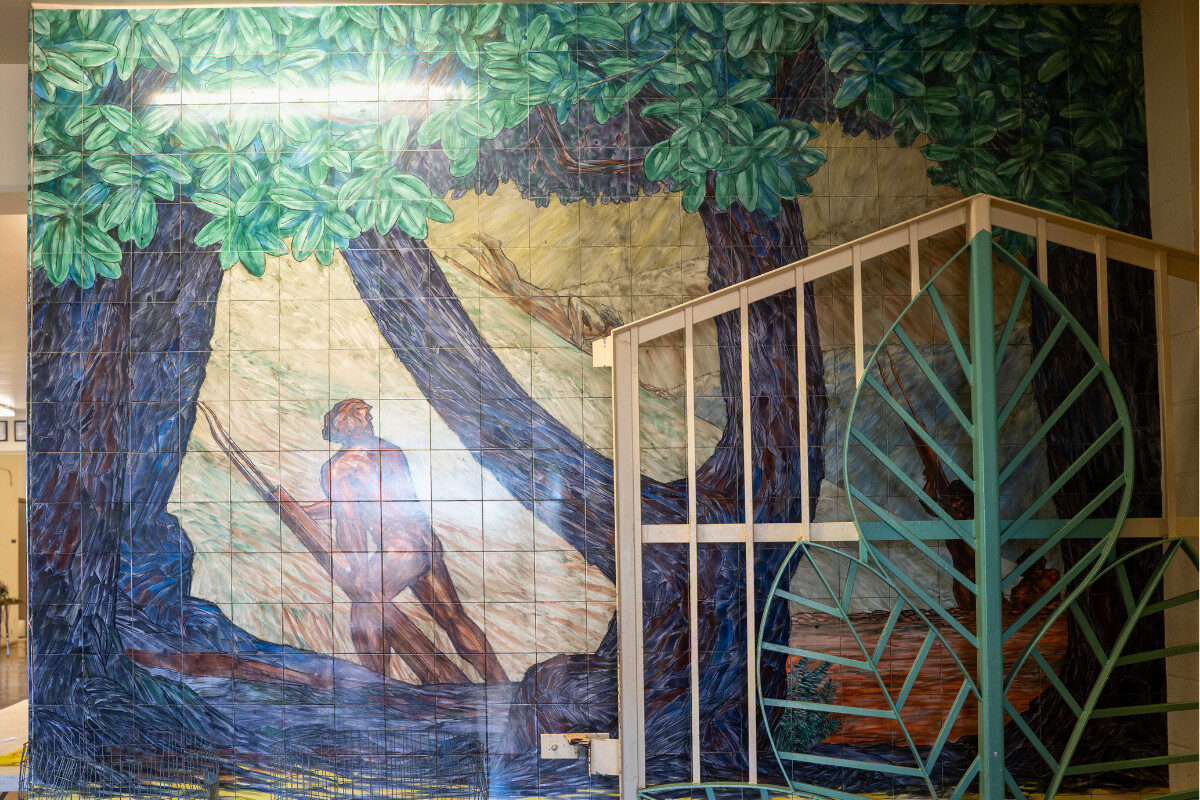 A warrior watches his heʻe holua (sledding) competitor race downhill
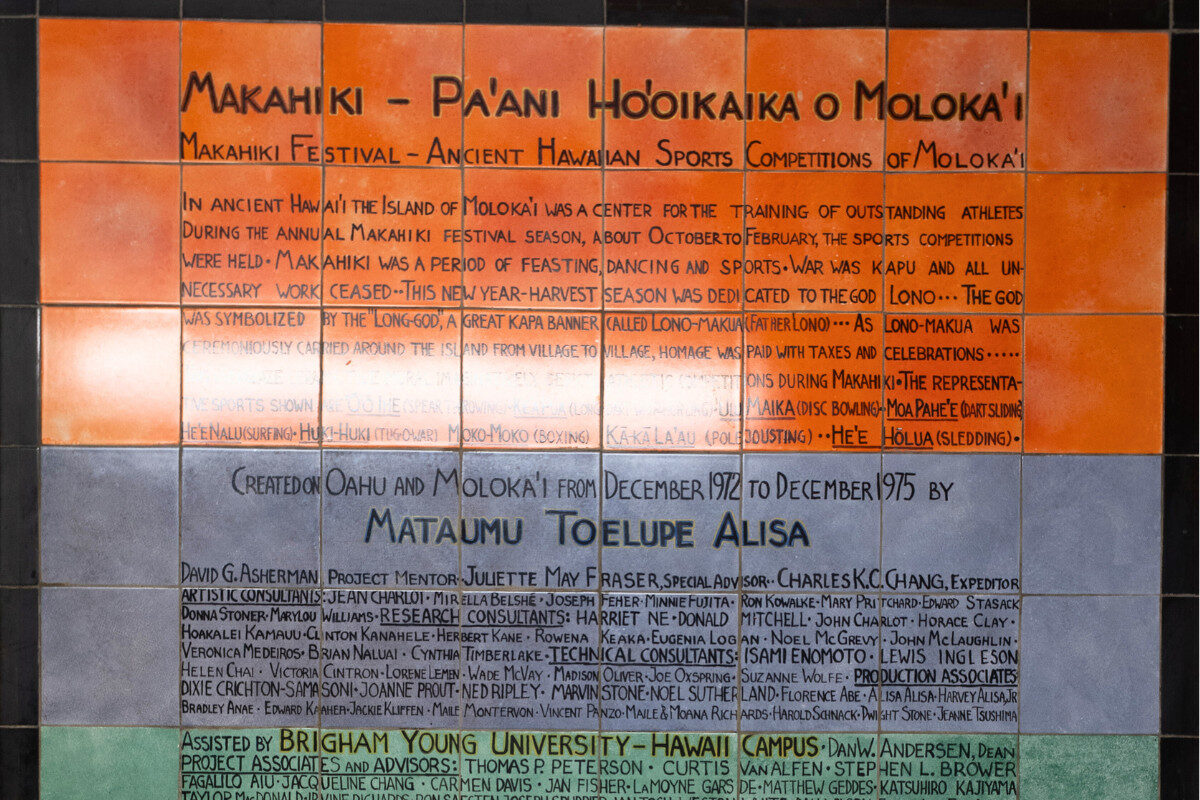 Placard describing mural installation
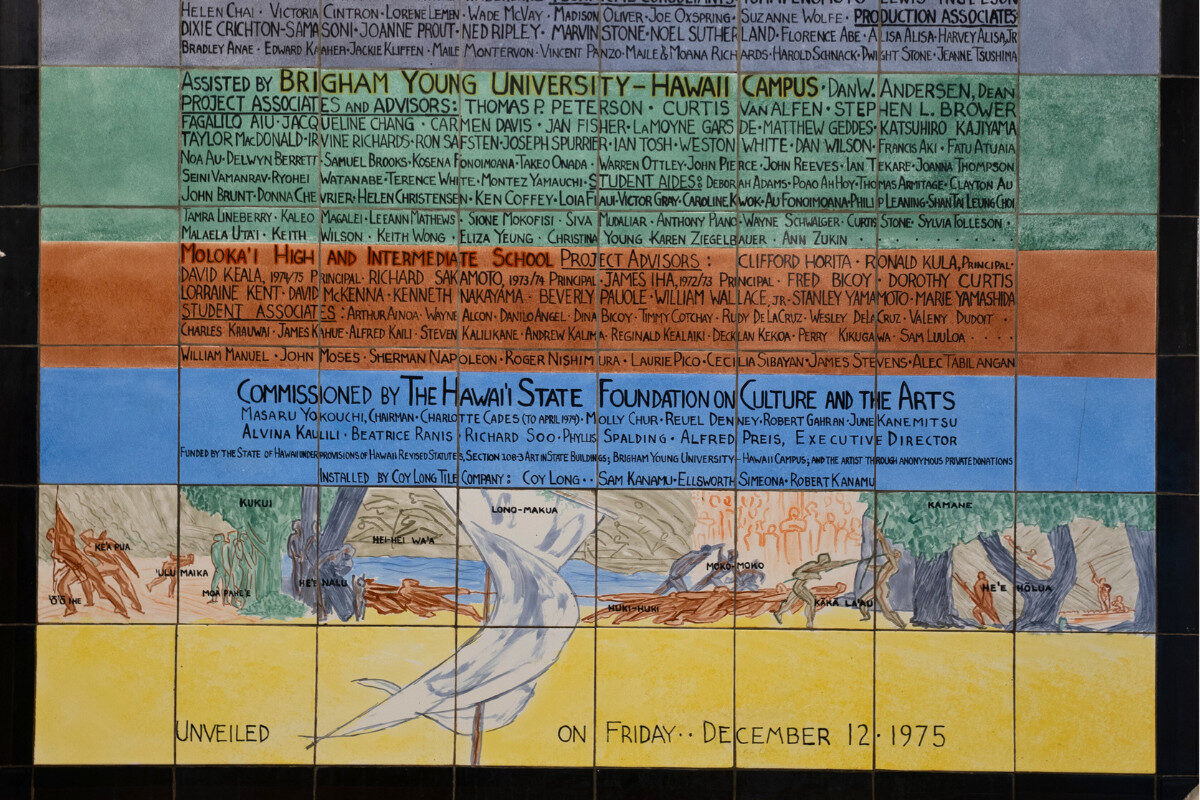 Placard describing mural installation