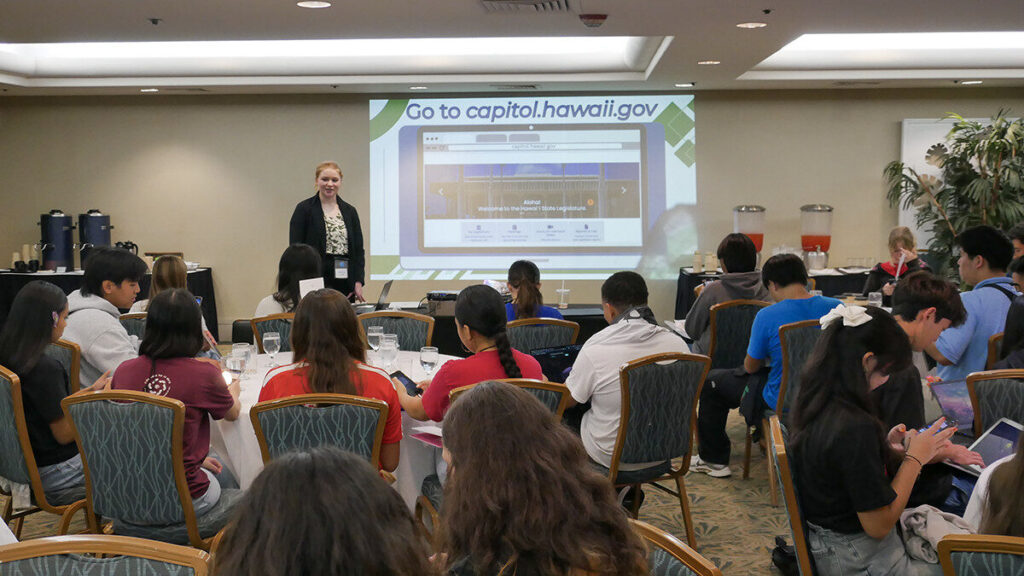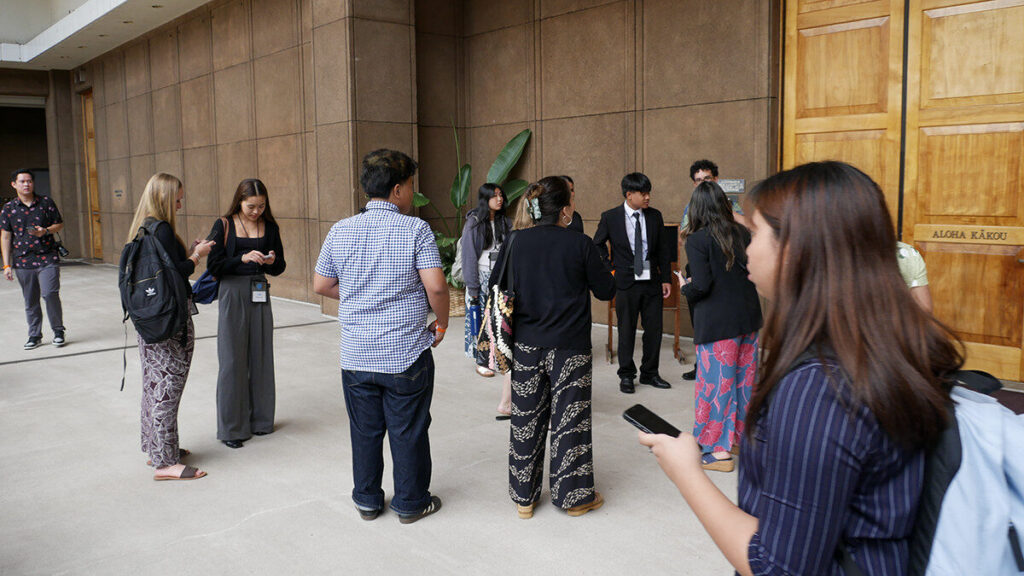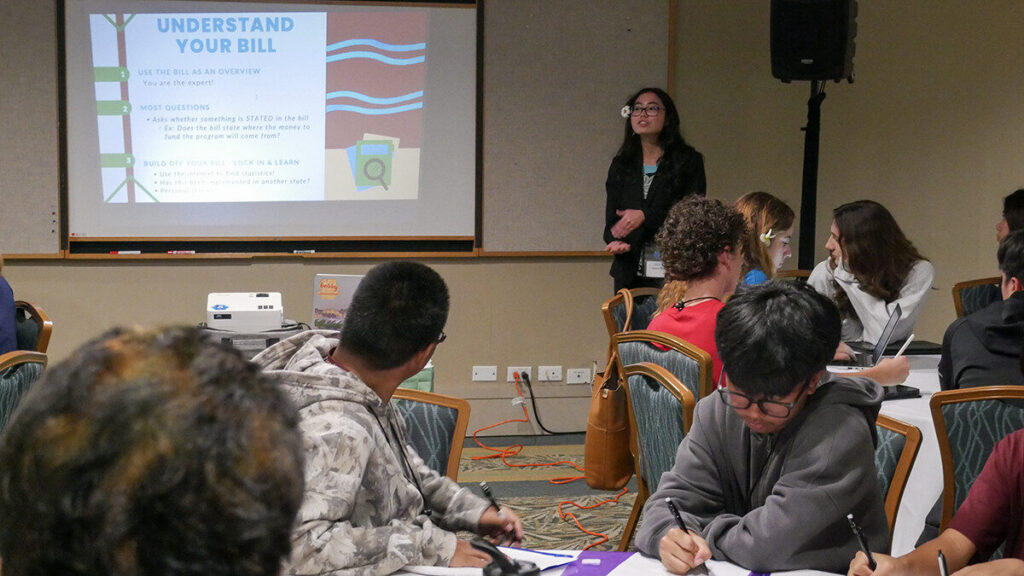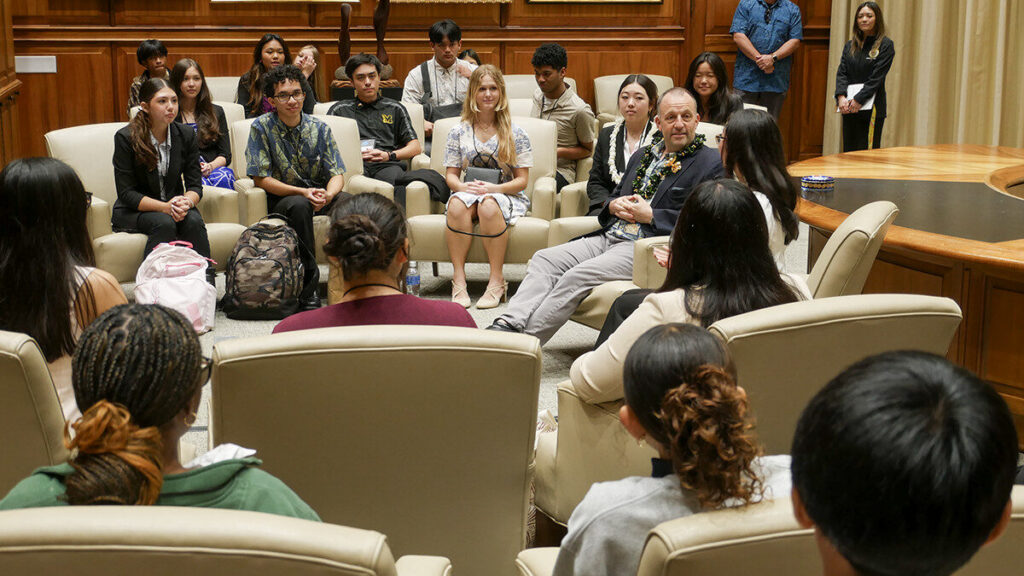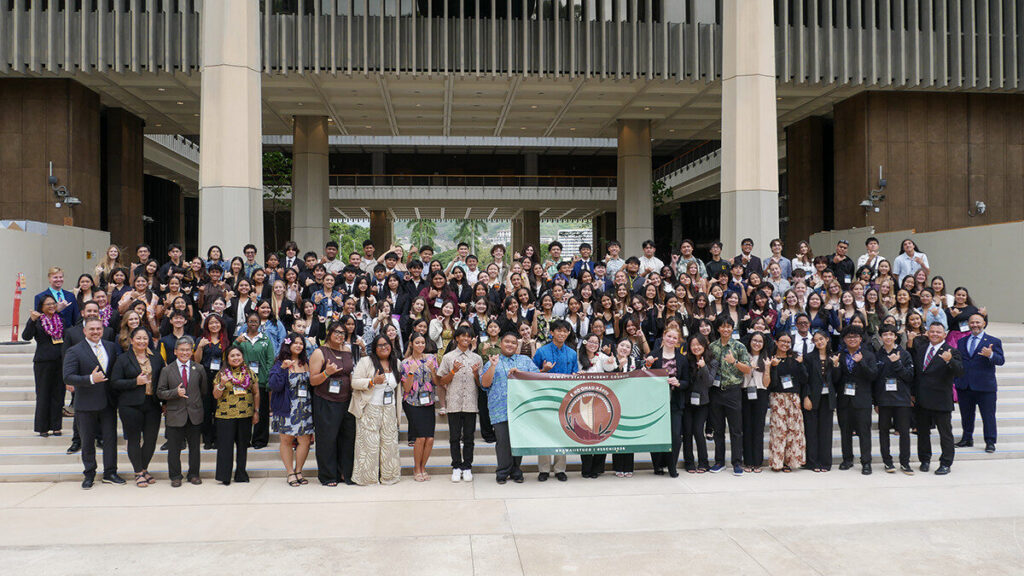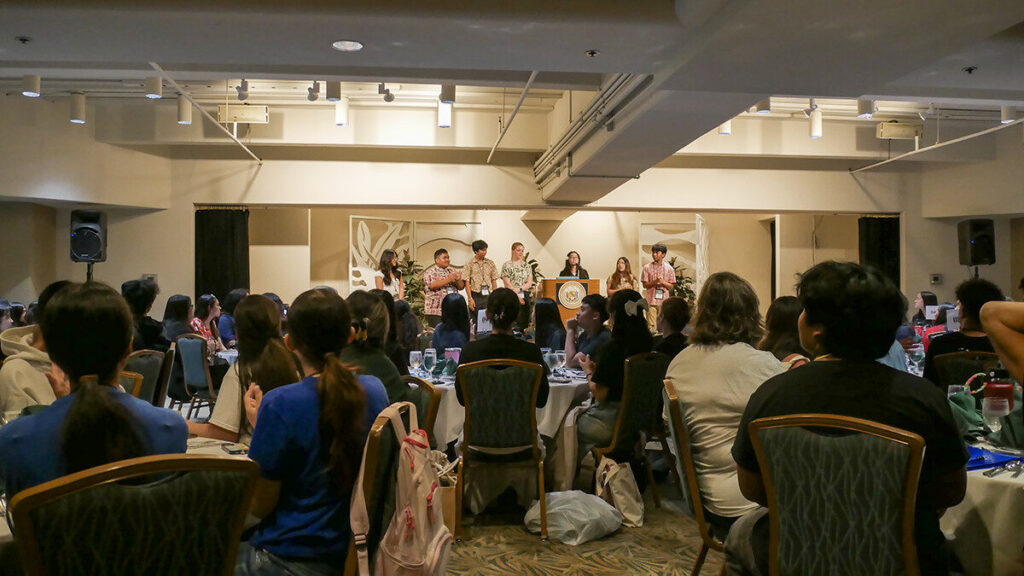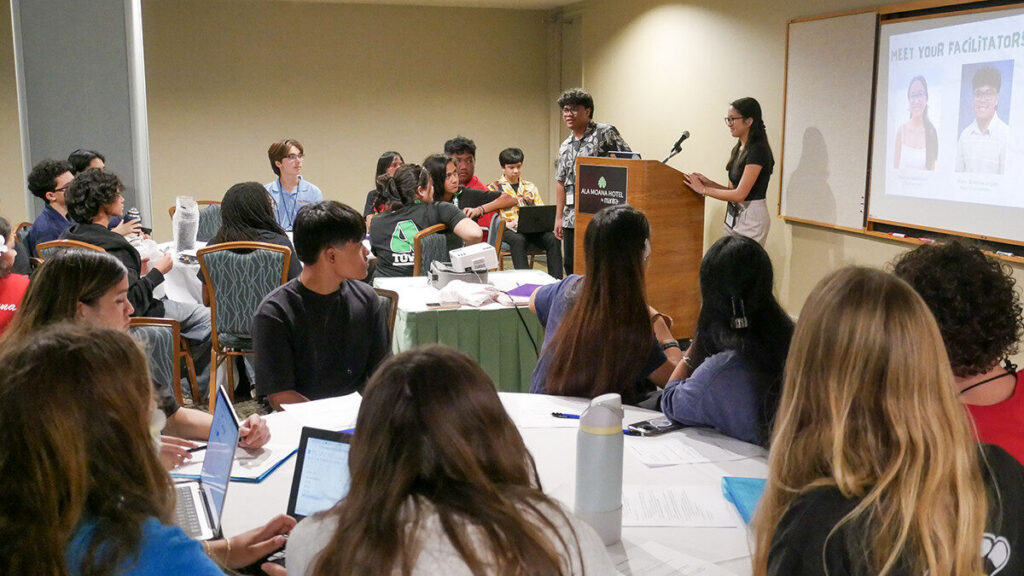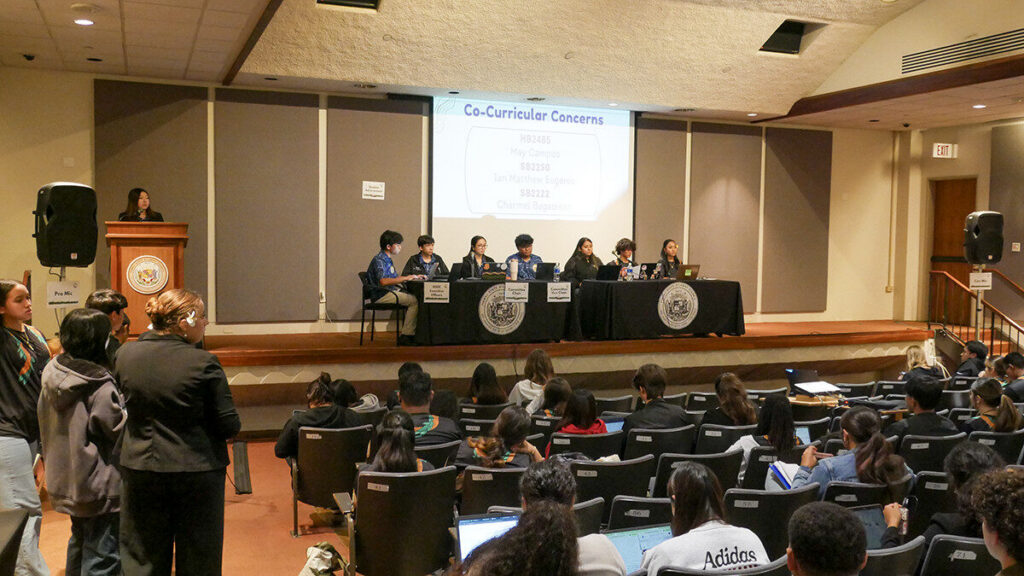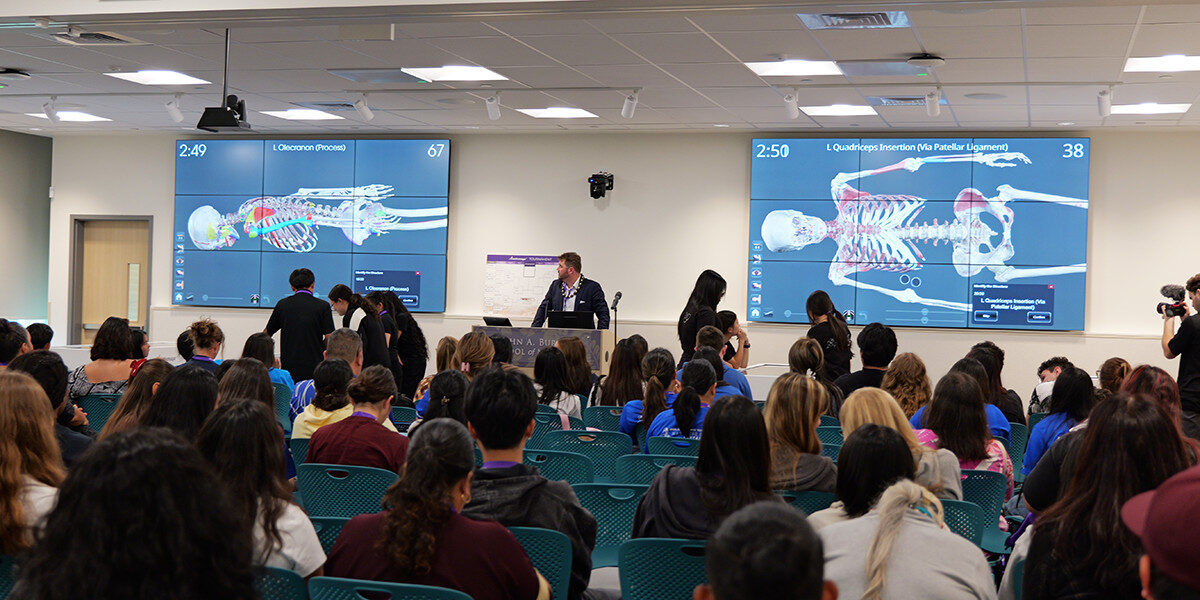
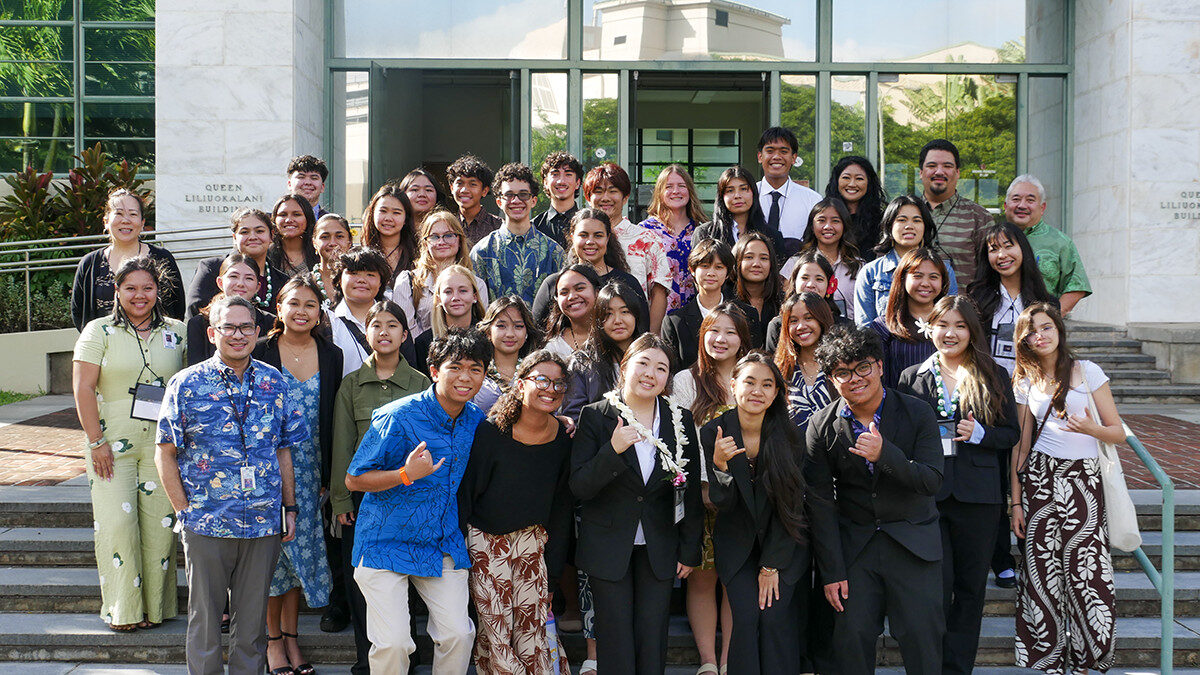
At the State Capitol this week, Hawai‘i public school students stepped into roles often reserved for adults, debating legislation, drafting testimony and meeting directly with lawmakers on issues that affect their daily lives. For more than 165 student delegates from across the state, the experience was part of the Secondary Student Conference (SSC), a long-running civic leadership program that places student voice at the center of the policymaking process.
Now in its sixth decade, SSC brings together middle and high school students from public schools statewide for an immersive, three day convening designed to teach civic engagement, leadership and advocacy. Through hands-on participation, students learn how laws are made, how to research and analyze bills, and how to effectively communicate their perspectives to decision makers.
This year’s conference focused squarely on action. Guided by the theme E Hoʻomau Kākou — Let us persevere together — delegates examined thousands of proposed bills, engaged in structured debate, and ultimately identified priority legislation related to student safety, transportation and mental health.
Rooted in the idea that no voyager crosses the ocean alone, the theme drew on the image of a canoe powered by many hands moving in rhythm toward a shared destination, a metaphor that came to life throughout the conference.
Superintendent Keith Hayashi said the conference reinforces the importance of student voice in shaping Hawai‘i’s future.
“You are our leaders of tomorrow,” Hayashi told delegates. “This conference gives students the opportunity to discuss relevant issues, shape perspectives and advocate for meaningful change. I am uplifted knowing that you are the next generation of leaders in the state of Hawai‘i.”
For many students, the conference also demystified a process that can often feel intimidating or inaccessible.
“Something that excites me about reading bills and writing testimony is that we get to see what our state is planning, and we actually get to be a part of the decision-making process,” said Jacob Aquino, a freshman at Farrington High School. “We get to say what we want to say about the bill.”
Mariella Wasserman, a senior at Hilo High School, said SSC gave her both the tools and confidence to bring civic engagement back to her campus.
“There are a lot of students at my school who feel like their voice doesn’t matter,” Wasserman said. “I want to take back not only the skills I’ve learned, but the sense of value I feel and share that with my school.”
She added that learning how to read legislation was especially impactful. “Unless you come to a conference like this, you don’t really learn how to read a bill. People don’t realize that submitting testimony is something anyone can do, everyone has a say in what they want for our state.”
The message resonated with first-time attendees as well.
“Don’t be shy,” said Odell Brink, a freshman at Kahuku High School. “If you don’t say what’s on your mind, then it’s not going to happen. Even though we’re kids, we still have something to say. Everybody, no matter who you are or what background you come from, anything you say is valuable and can make change.”
Jeremiah Jacinto, a senior at Henry Perrine Baldwin High School, said SSC affirmed his belief that students deserve a seat at the table when decisions affect their lives.
“I wholeheartedly believe that students should be at the table,” Jacinto said. “As I’ve continued to be involved with the legislature, I’ve learned that these people are willing to hear me out and that my lived experiences are more than enough to be credible testimony.”
For Lotus Yasuda, a senior at Waipahu High School and chairperson of the Hawai‘i State Student Council, the conference represents the power of collaboration.
“This conference means everything to me,” Yasuda said. “My passion is finding ways to bring student voice to life. When students work together, that’s how change happens. It starts with observing what’s happening in your community and choosing to get involved.”
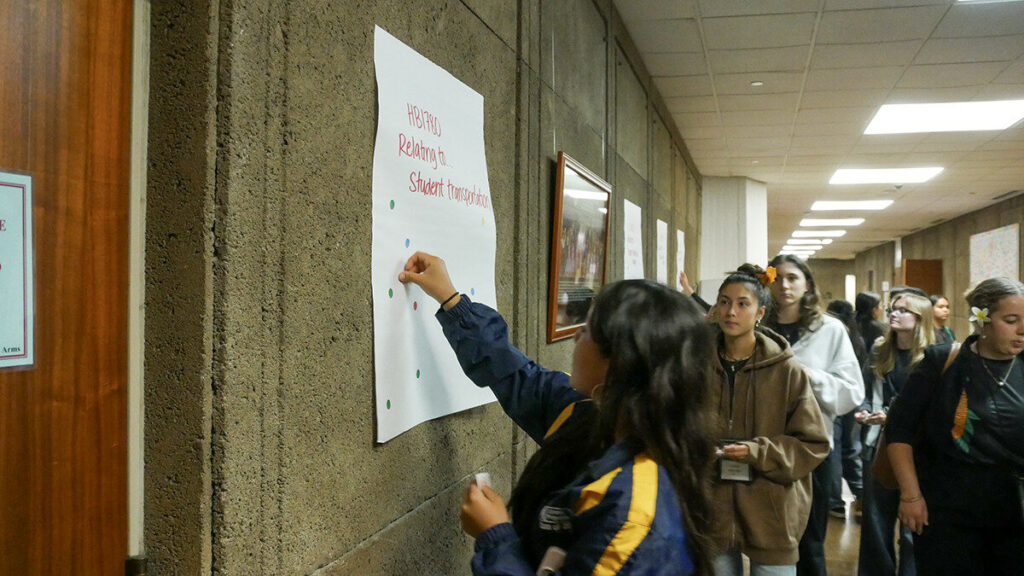
At the conclusion of the conference, students identified three priority bills they felt would have the greatest impact on their lives and communities:
HB2445 – Relating to student safety. Requires the Department of Education to develop and implement a standardized emergency response plan governing immigration enforcement activity at or near public schools.
HB1780 – Relating to student transportation. Requires the Department of Education to establish a student bus fare rate system including free bus passes for students eligible for free or reduced-price lunch.
SB2222 – Relating to mental health. Allows excused absences for students’ mental or behavioral health and exempts those absences from compulsory attendance penalties.
As delegates left the Capitol, many echoed the same message: student voice is not just welcomed, it is essential.
“Students are here. Students are willing to participate and voice their concerns,” Jacinto said. “The question isn’t whether students care. It’s whether we create systems that allow them to participate.”
After more than five decades, the Secondary Student Conference continues to do just that, one paddle stroke at a time.