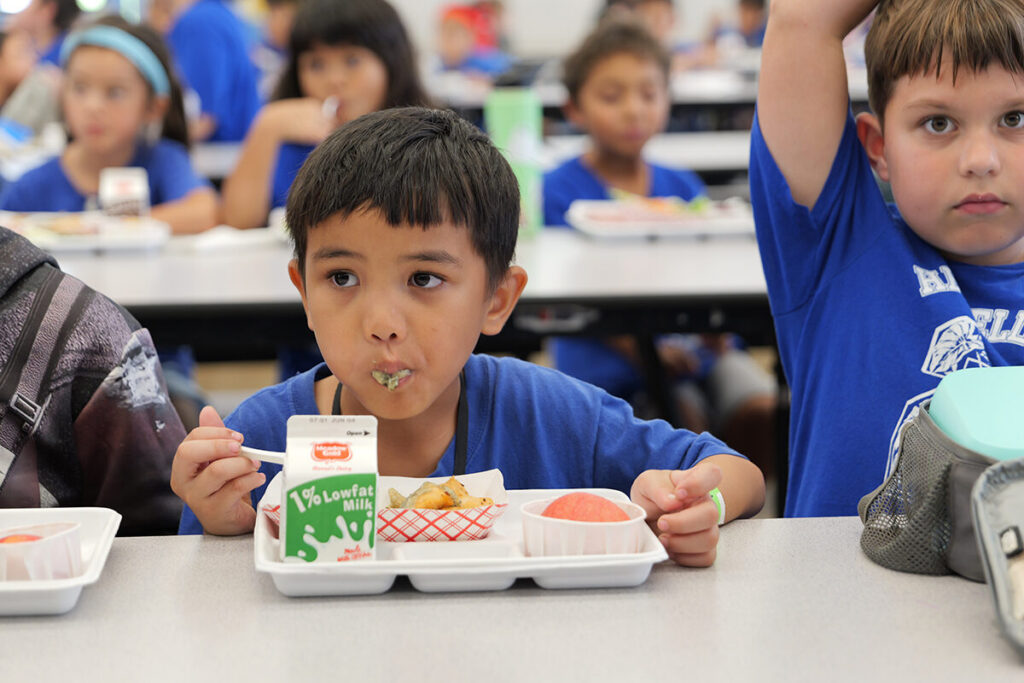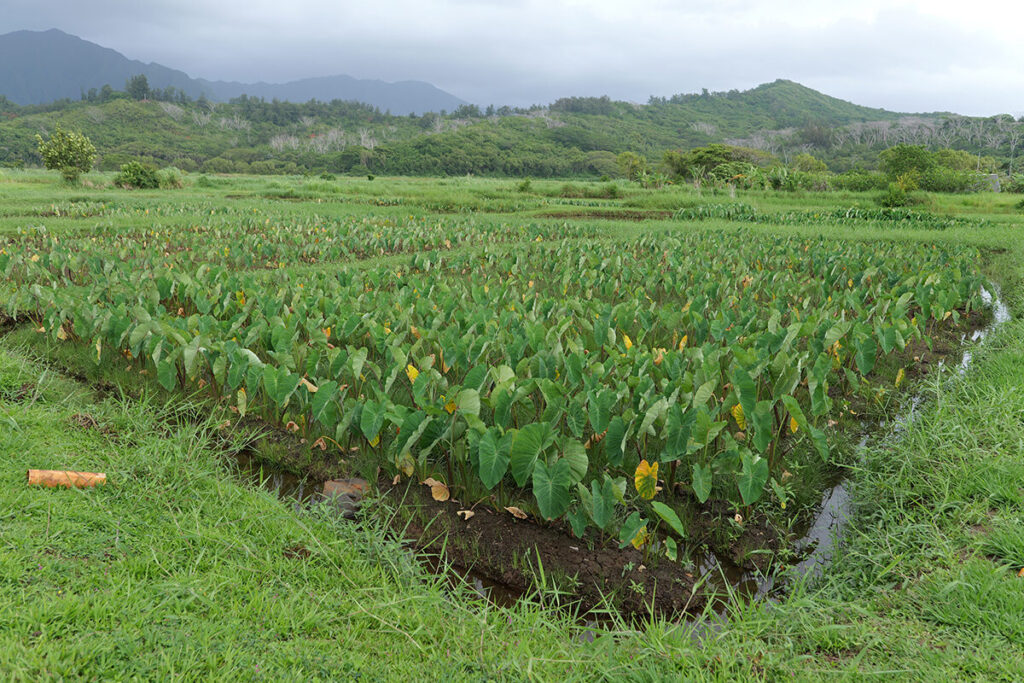
Farm-fresh lūʻau leaves grown minutes away from Heʻeia Elementary School made their way into student lunches as Hawaiʻi public schools expand farm-to-school efforts through new hyper-local purchasing practices.
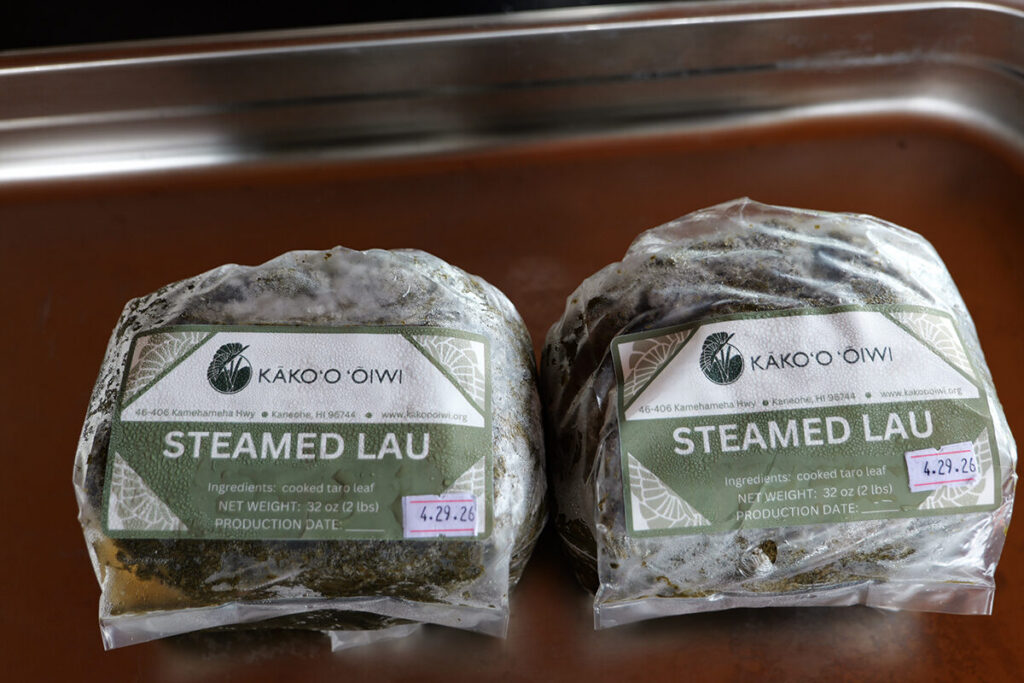
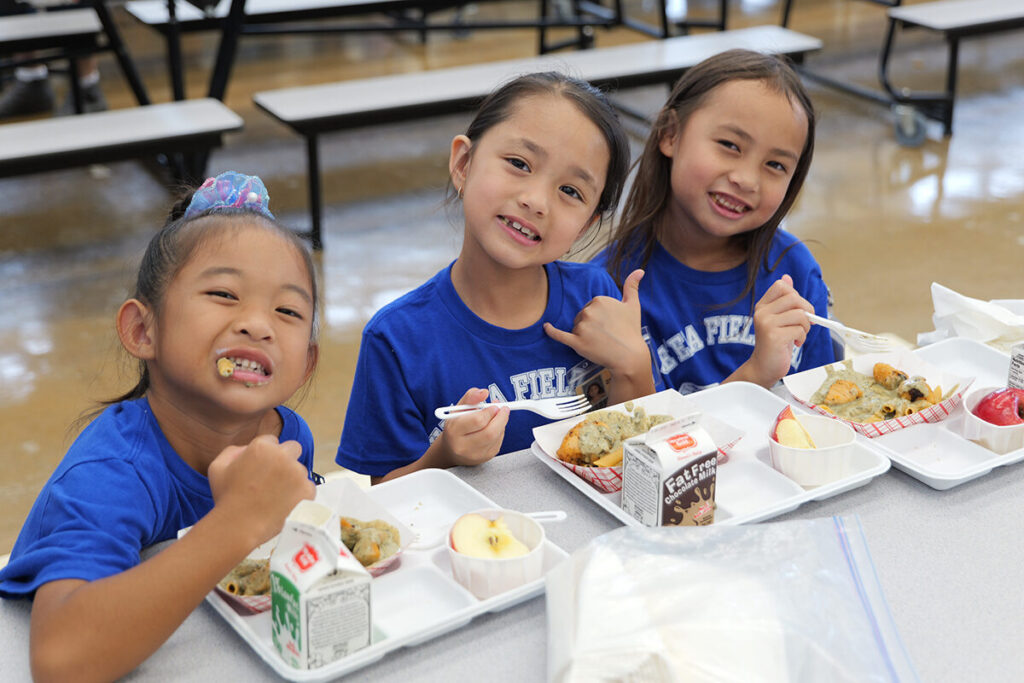
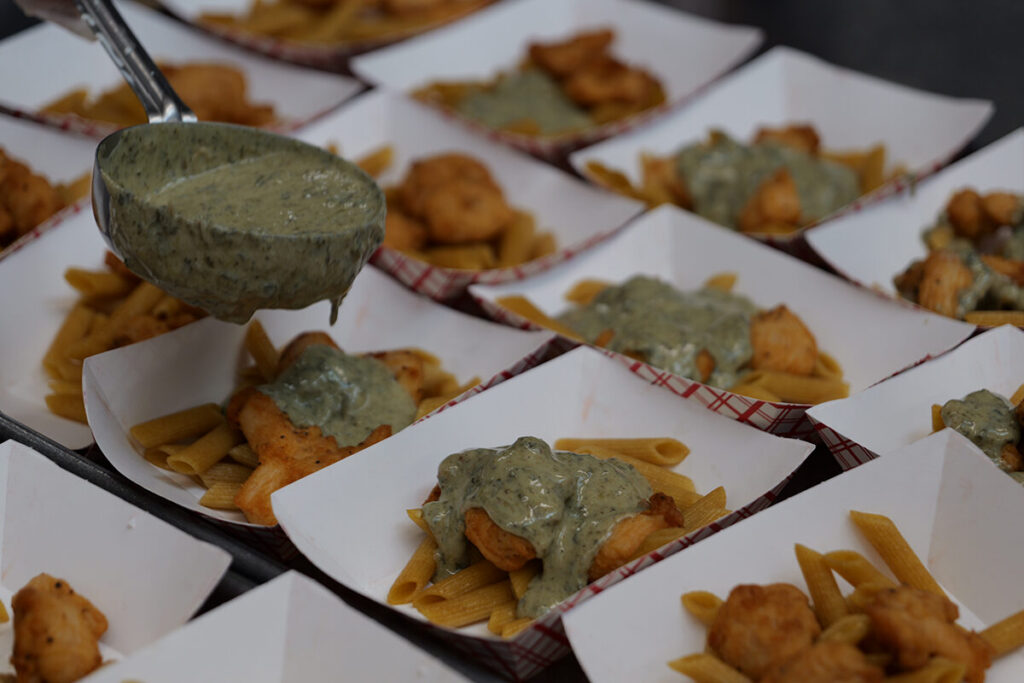
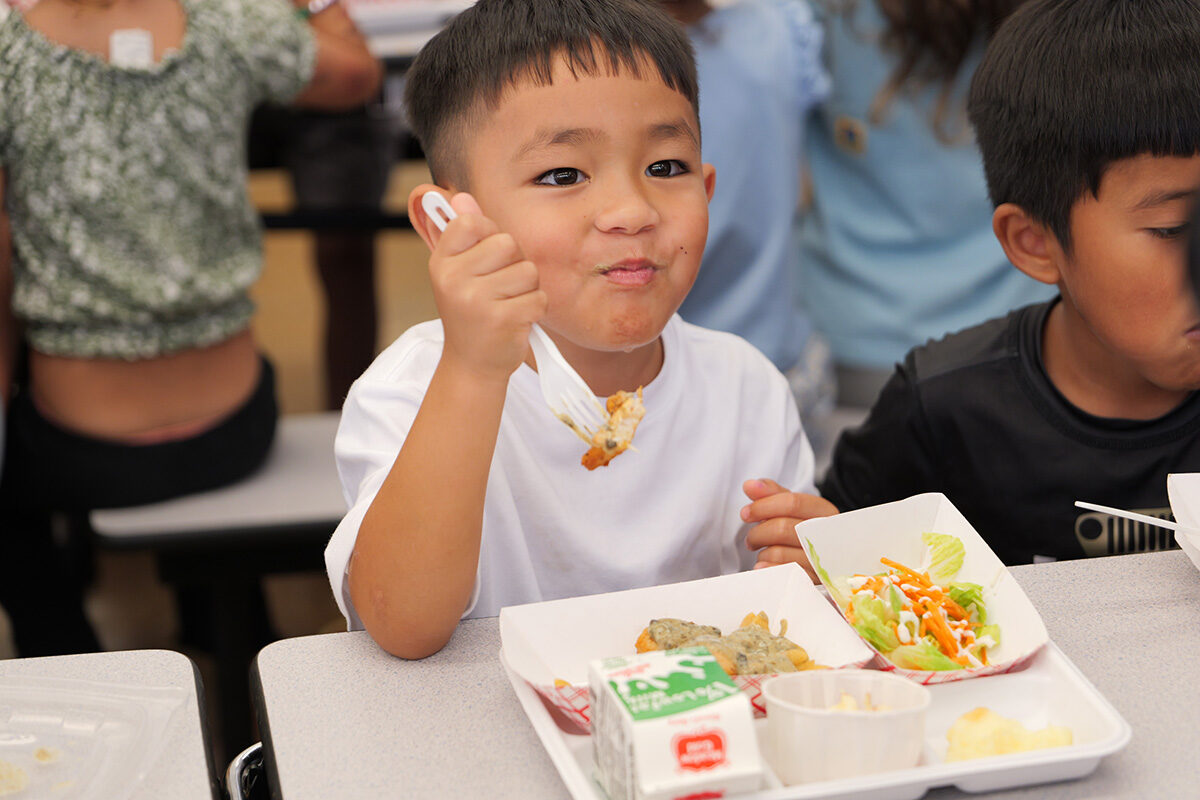
Students at Heʻeia Elementary in Windward Oʻahu enjoyed locally grown lūʻau leaves mixed into their chicken pasta florentine lunch today, harvested a few miles away at Kākoʻo ʻŌiwi. For ease of use for the school cafeteria, the leaves were pre-cooked then frozen for quick and immediate use. The lūʻau leaves debuted on students’ plates for the first time last month and are expected to be a regular menu item next school year, as available.
The partnership between Heʻeia Elementary and Kākoʻo ʻŌiwi is another example of a small farm purchase completed through the Department’s new hyper-local purchasing approach, which allows schools to procure small quantities of locally grown produce — whether from nearby farms or their own gardens — while remaining compliant with state procurement requirements. Under this model, purchases must remain under a $5,000 cap over the 10-month school year and focus on a single farm or food hub providing a specific item to one school. The produce must also fit within an approved HIDOE recipe, and vendors must maintain Hawaiʻi Compliance Express compliance and food safety certification.
For many students, the new dish presented a familiar local ingredient in an unexpected way.
“It was like something I never tried before,” Michaela Davis, a fourth grader at Heʻeia Elementary said. “I wouldn’t expect something like a taro leaf to be in pasta.”
“I thought it was really creative,” added sixth grader Akemi Kuhau-Liftee. “I never thought you could put that into pasta.”
Although some students were hesitant with the unique color of the sauce, most were pleasantly surprised after trying the dish.
“I thought it wasn’t going to be that good, but it turned out to be really good,” Davis said.
“It actually tasted really good,” Kuhau-Liftee said. “I didn’t think it would actually taste like that… it tasted salty like regular laulau.”
“The lunch was really good and it was super awesome,” fifth grader Noʻeau Kalahiki said. “The sauce, the chicken, the pasta — everything.”
Fourth grader Anthony Martin said he appreciates seeing more locally grown foods in school meals. “I like local things because they’re fresh, they’re nice, and they taste better than very processed things.”
Students at Heʻeia Elementary regularly visit Kākoʻo ʻŌiwi through field trips where they help work in the loʻi and learn about Hawaiian agriculture and food systems firsthand — creating a direct connection between what students experience on the land and what is served in their cafeteria.
For Kākoʻo ʻŌiwi staff, the partnership is also an opportunity to strengthen ties between local farms, culture and the community. The community-based nonprofit in the Heʻeia ahupuaʻa is dedicated to perpetuating Native Hawaiian culture and sustainable agriculture, including management of a 405-acre wetland project focused on restoring native food systems, ecological productivity and indigenous ecosystems.
“It’s exciting to be a part of supplying our keiki, especially in the same ahupuaʻa that we work in,” said Autumn Blaisdell, value-added products co-manager at Kākoʻo ʻŌiwi.
Blaisdell said the model creates new opportunities for smaller farms to participate in school meal programs.
“With this micropurchasing, it almost feels like a foot in the door,” Blaisdell said. “It’s exciting that we have the opportunity to make small differences and show you don’t necessarily need to be this huge corporation to get healthy products into our community.”
The expansion of the hyper-local purchasing process has already demonstrated success through partnerships with small farms — such as the recent introduction of locally grown microgreens at Kahaluʻu Elementary and school grown produce at Waipahu High and Leilehua High on O‘ahu and Hāna High & Elementary on Maui. McKinley High School also recently partnered with an urban garden in Kakaʻako — MetroGrow — to procure locally grown lettuce for their school meals. Additional agreements are in development across the state.
In addition to increasing the freshness and quality of school meals, the effort supports broader goals of sustainability, student wellness and local food system resilience. The initiative is part of HIDOE’s broader farm-to-school program, which supports food sustainability in Hawaiʻi and aligns with Act 175’s goals to improve student health while strengthening the local agricultural economy.
Hawaiʻi public schools are among the state’s largest institutional food consumers, serving more than 100,000 student meals each day. HIDOE continues to work with local farmers and vendors statewide to expand the regular use of fresh, Hawaiʻi-grown produce in school cafeterias.